
Colour Correction for Damaged Hair

Updated: Jun 5

When your hair already feels dry, stretched, patchy or fragile, colour correction for damaged hair is never just about getting the shade right. It is about protecting what is still healthy, avoiding another round of unnecessary stress, and building a result that looks polished without pushing the hair too far.
That is the part many people do not realise until they are sitting in the chair with uneven bands, faded ends or breakage around the front hairline. Corrective colour on compromised hair needs a different approach from a standard tint appointment. The goal is not speed. The goal is control.
What colour correction for damaged hair actually means
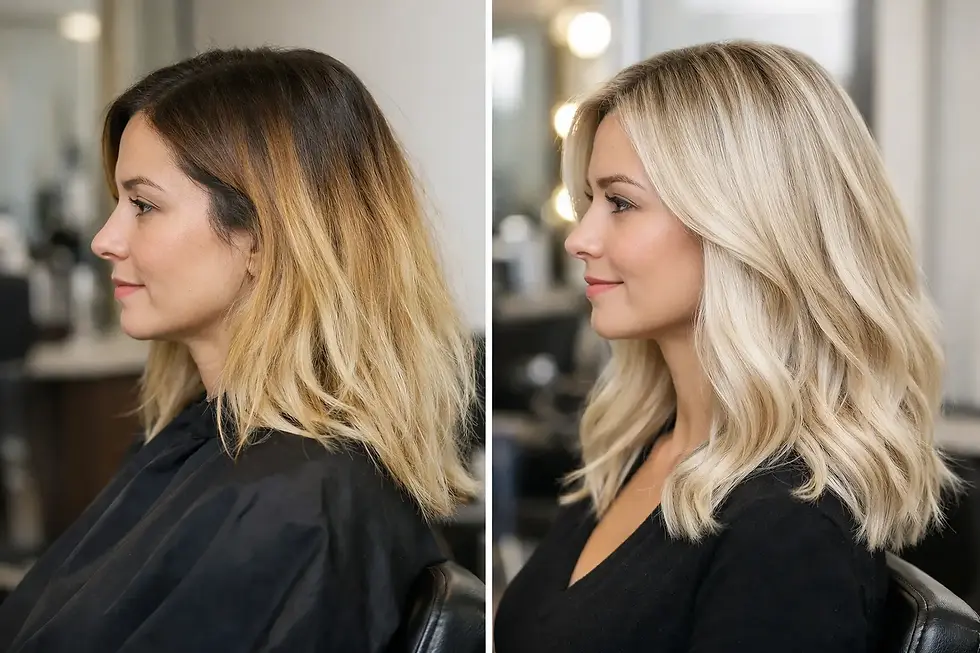
Colour correction for damaged hair usually involves fixing one or more issues at the same time. That might be brassiness after bleach, dark bands from box dye, overly ashy lengths that have gone flat, or porous ends that grab colour too quickly and turn muddy. In some cases, the hair is also weakened by heat, over-processing, rough brushing or poor extension removal.
A proper correction starts with the condition of the hair, not the colour chart. If the structure is too compromised, chasing a dramatic result in one sitting can leave the hair looking thinner, duller and more uneven. A good corrective plan often means deciding what can safely be done now and what should wait.
This is where experience matters. Damaged hair does not process evenly. Porous sections can absorb pigment too fast, while healthier areas may lift or tone differently. Two people asking for the same result will not need the same formula, timing or technique.
Why damaged hair changes the whole colour plan
Healthy hair gives a colourist more options. Damaged hair removes some of them. That does not mean beautiful results are off the table, but it does mean the process has to be more selective.
Lightening is usually the biggest concern. If the hair has already been bleached, repeatedly coloured or exposed to strong home products, more lift may not be the safest route. Sometimes the best correction comes from refining tone, softening contrast, blending bands or adding depth in the right places rather than trying to force everything lighter.
Porosity is another major factor. Hair that is damaged from mid-length to ends often pulls in toner or darker shades unevenly. That is why some people leave appointments with roots that look fine but ends that appear too dull, too dark or slightly greenish. It is not always the formula itself. It is often how damaged hair reacts.
Elasticity matters too. If the hair stretches too much when wet and does not bounce back, the priority should be preserving strength. In that case, a stylist may recommend a phased plan instead of a dramatic one-day change.
When to pause before correcting the colour
There are moments when the safest professional advice is to slow down. If your hair feels gummy when wet, snaps easily during brushing, or has visible white dots and split ends throughout, an aggressive colour correction is unlikely to give a good finish.
The same applies if you have recently used box dye, bleach, high-lift tint or a strong colour remover at home. Hair can look manageable on the surface while still being unstable underneath. In those cases, rushing in with another chemical service can make the problem more expensive and more difficult to fix.
A careful consultation should look at your full colour history, not just the shade you have now. What was used over the last year matters. So does how often you heat-style, whether you swim regularly, and whether extensions or previous salon work have affected certain areas more than others.
What a realistic correction looks like
The best corrective work often looks effortless, but it is built on restraint. A realistic plan may include toning down unwanted warmth, rebalancing patchy areas, softening harsh regrowth lines, or adding lowlights to create a more natural finish while the hair recovers.
For some clients, the right choice is working closer to their current level rather than aiming for a dramatic blonde. For others, it means trimming compromised ends first so the finished colour looks healthier and more expensive. There is always a balance between the result you want and the condition your hair can support.
That can be frustrating if you had hoped for a complete transformation in one appointment. But a colour correction that respects the condition of the hair nearly always looks better in the long run than one that forces a result and leaves the hair rough, broken or inconsistent.
How salons approach colour correction for damaged hair
A professional corrective appointment usually starts with a strand test and a close look at the hair in natural light. That helps identify hidden banding, previous overlapping bleach, uneven porosity and tonal build-up that indoor lighting can disguise.
From there, the correction may involve a mix of techniques rather than one all-over formula. A stylist might protect the most fragile hair while treating only the areas that truly need adjusting. They may use different strengths, different processing times or separate toning strategies from roots to ends.
In many cases, less product is used, not more. The smartest approach is often highly targeted. If only certain sections need lifting or rebalancing, there is no reason to process the entire head and create new damage.
Glossing and toning can also play a bigger role than clients expect. On damaged hair, the right gloss can add shine, improve tone and make the hair look healthier without the stress of aggressive lightening. It is not a shortcut. It is often the more polished option.
What to avoid if your hair is already compromised
The biggest mistake is trying to correct colour at home when the hair is already distressed. Layering purple shampoo, permanent dye, bleach baths and internet advice on top of damaged hair rarely creates a clean fix. More often, it creates extra bands, unpredictable tone and further breakage.
It is also worth being cautious with inspiration photos. Many reference images show extension-filled, heavily styled or freshly glossed hair under studio lighting. Your own result needs to suit your actual density, condition and maintenance routine.
Another common issue is asking for ash to cover warmth in hair that is very porous. If the underlying colour has not been properly balanced, or if the ends are over-absorbing pigment, ash can quickly tip into flat or murky. Neutralising warmth is precise work. Too little leaves brassiness, but too much can drain the colour completely.
Aftercare matters as much as the correction itself
Once the colour has been corrected, keeping it looking good depends on how the hair is treated afterwards. Damaged hair fades faster, tangles more easily and loses shine sooner if aftercare is not consistent.
That usually means reducing heat where possible, using moisture and bond-supporting care suited to your hair type, and being realistic about how often you should refresh the colour. Washing less aggressively, protecting the hair during sleep and keeping up with trims all make a visible difference.
If you wear tape extensions or have finer hair, aftercare needs to be even more considered. Over-oiling at the roots, harsh brushing or using the wrong products can affect both the colour finish and the overall condition. Beautiful colour does not hold its shape for long if the hair underneath is still under strain.
The best result is not always the lightest one
For many women, confidence comes back the moment their hair looks even, glossy and intentional again. It does not have to be the palest blonde or the boldest transformation. Sometimes the most flattering correction is richer, softer and healthier-looking than the original target.
That is especially true when the hair has been through too much already. A result that suits your skin tone, grows out well and keeps the hair feeling stronger will nearly always be more wearable than a high-maintenance colour achieved at the expense of condition.
If your hair is damaged, the right correction should feel like a reset, not another risk. Good salon work does not just cover a colour problem. It restores balance, shine and trust in your hair again. At Sara Styles Hair, that careful, client-first approach is what makes corrective work feel worth doing.
If you are weighing up a correction, think beyond the immediate shade. The best decision is the one that leaves your hair looking better now and healthier at your next appointment too.
See Real Results
Explore real client results from Sara Styles Hair in East London: View on Instagram
Book Your Appointment
Book your appointment at Sara Styles Hair in Bethnal Green, East London: Book Now
If your hair needs strength before more colour work, view Olaplex treatment in East London, read about repairing damaged hair, or book a consultation with Sara Styles Hair.


Comments