

Fine Hair Transformation for Natural Fullness

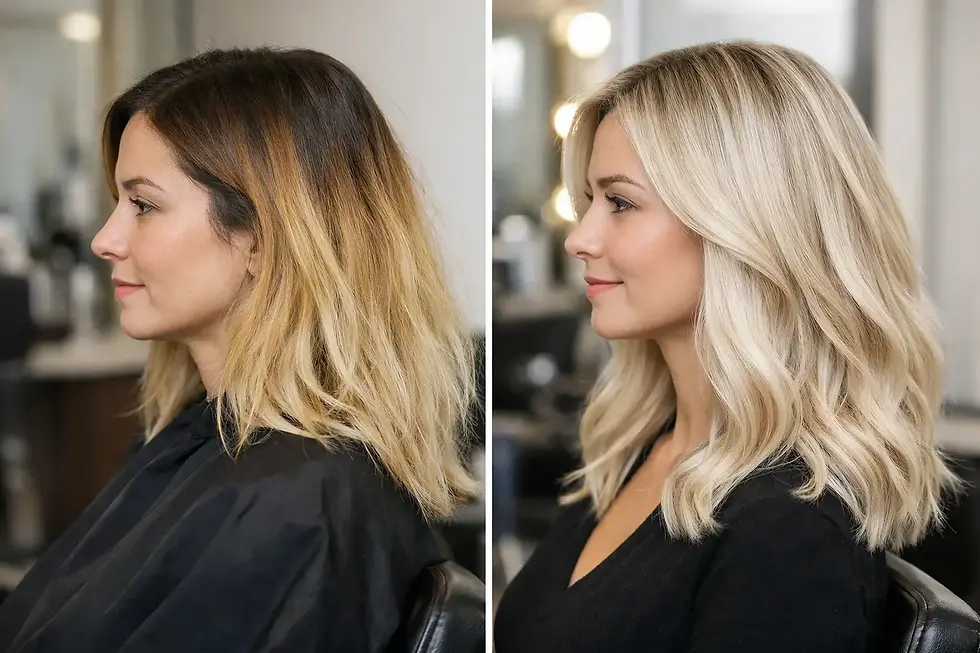
Fine hair does not need to be hidden beneath heavy styling or treated as a limitation. The most successful fine hair transformation is usually a considered combination of cut, colour, condition and, where appropriate, discreet tape extensions. The aim is not simply to create more hair. It is to make your own hair look fuller, healthier and entirely believable in everyday life.
For many clients, the frustration is familiar: hair that looks flat by lunchtime, ends that appear sparse, or colour that makes the overall effect feel thinner rather than more polished. A personal consultation is where the difference starts. Your density, texture, previous colour history, styling routine and the condition of your lengths all affect what will work well.
What a Fine Hair Transformation Should Look Like
A natural result should still feel like you. It may mean more density through the ends, soft movement around the face, brighter dimensional colour, or enough extra length to make styling feel more versatile. It should not mean extensions that show through, harsh contrast at the root, or a cut that removes the little density you have.
Fine hair can be delicate, but it is not all the same. Some clients have a lot of fine strands and mainly need a shape that holds volume. Others have both fine texture and lower density, so their hair benefits from carefully placed extensions or a colour plan that creates visual depth. The right approach depends on both factors.
At Sara Styles Hair, the focus is always on wearable results. A fuller finish has to work beyond the salon chair - at your desk, on the school run, in the gym and after you have styled it yourself at home.
Start With the Cut, Not Just the Volume
It is tempting to assume that more layers always create volume. On fine hair, too many short layers can have the opposite effect, leaving the perimeter wispy and the ends thinner. A well-judged cut often keeps more weight through the baseline while introducing only enough internal movement to stop the shape looking heavy.
A blunt or softly textured one-length shape can make fine ends look denser immediately. If you prefer movement, longer face-framing layers can add softness without sacrificing the fullness around the bottom. The best cut will reflect how you wear your hair most days. If you rarely use heated tools, the shape needs to sit well with minimal effort.
Regular trims are also part of maintaining the result. Fine ends can split and become transparent quickly, which makes even a good haircut lose its polished appearance. Small, planned trims are usually more useful than waiting until significant breakage forces a larger cut.
Colour Can Create the Illusion of More Hair
Thoughtful colour is one of the most effective ways to make fine hair appear fuller. Flat, single-process colour can sometimes expose gaps in density, particularly when there is a strong contrast between your natural root and lighter lengths. Fine, blended dimension helps the eye read the hair as thicker.
A soft balayage, delicate highlights or lowlights placed with intention can bring movement through the lengths without creating obvious stripes. The placement matters as much as the shade. Brightness around the face can lift the overall look, while a little depth underneath and through the root area gives the hair a more substantial appearance.
For clients beginning to see grey, grey blending can be a gentler option than chasing full root coverage every few weeks. A softer grow-out often looks more modern and can reduce the harsh line that makes roots and partings feel more noticeable. It is not right for everyone, particularly if you love solid coverage, but it is worth discussing if lower-maintenance colour is a priority.
The condition of the hair must guide every colour decision. Over-lightening fine hair can reduce shine and compromise strength, so achieving a lighter result may need to happen gradually. Bond-building treatments such as Olaplex can support the hair during a colour journey, but they do not make repeated over-processing risk-free. A realistic plan protects both your colour and your length.
When Tape Extensions Are the Right Choice
Tape extensions can be transformative for fine hair when they are selected and fitted with care. They are particularly effective for clients who are happy with their current length but want fuller ends, more body through the back, or extra support for styles such as waves and blow-dries.
The key is using the right amount of hair. More is not automatically better. Overloading fine hair can make the extensions uncomfortable, difficult to conceal and unnecessarily stressful for the natural hair. A lighter, strategically placed set can create a far more convincing result than a full, heavy installation.
Colour matching is equally important. Extensions should blend with the mid-lengths and ends, not only the root. Where hair has balayage or varied tones, custom blending shades may be needed to avoid a blocky finish. The placement should allow you to wear your usual parting and put your hair up with confidence.
Tape extensions do require maintenance. They need professional removal and refitting at the recommended interval, and home care matters. Brushing gently, keeping conditioner away from the tape area and avoiding sleeping with wet hair all help protect the attachment points. Extensions are a commitment, but for the right client they can make daily styling noticeably easier.
Build Condition Before Chasing Length
If your fine hair is fragile from bleaching, heat damage or previous extension issues, the first stage of your transformation may be restoration rather than immediate length. This can feel slower, but it often produces the better long-term result.
A tailored plan may include a healthy trim, a more forgiving colour direction, regular bond-building care and a keratin treatment where suitable. Keratin can reduce frizz and make styling easier, but it will not create density. On very limp hair, a smoothing service can make the texture feel flatter, so the decision should be based on your real styling concerns rather than a trend.
At home, fine hair usually responds best to a simple routine. Use shampoo and conditioner suited to your scalp and hair condition, apply heat protection every time you use hot tools, and avoid relying on very heavy oils or masks near the root. Product build-up can make fine hair collapse, even when the products themselves are high quality.
Styling That Supports a Fuller Finish
The best salon result should not depend on an hour of styling every morning. A good cut and colour foundation make a difference, then a few small styling adjustments can help preserve the shape.
Drying the roots with lift, changing your parting occasionally and using lightweight volumising products can all add body without making the hair stiff. If you use a curling wand, avoid curling every section in the same direction. Alternating the pattern creates softer movement and helps fine hair look less separated.
Be careful with backcombing. It can give quick volume for an event, but repeated aggressive teasing can lead to tangling and breakage. For regular wear, a smooth blow-dry with root lift is kinder to fine hair and usually looks more refined.
A Plan That Feels Personal
A fine hair transformation is most convincing when it is built around your lifestyle, budget and maintenance preferences. If you enjoy regular salon visits and love a bigger change, colour and tape extensions may be the ideal pairing. If you prefer a lower-maintenance routine, a density-focused cut with subtle dimensional colour may give you enough impact without a lengthy upkeep schedule.
During a consultation, be honest about what you find difficult about your hair and how much time you want to spend on it. Bring inspiration, but also be open to professional advice about what your hair can comfortably support. The most confidence-building result is not the most dramatic one - it is the one that looks natural, feels comfortable and remains healthy between appointments.
If your hair has been made to feel like an afterthought in the past, it deserves a more considered approach. With precise cutting, careful colour work and extensions only where they genuinely add value, fine hair can look fuller without losing its natural character.


Comments