

How to Choose Balayage Placement That Suits You

The difference between balayage that looks softly expensive and colour that simply looks lighter often comes down to placement. Knowing how to choose balayage placement means looking beyond a saved photo and considering your natural base, face shape, haircut, hair condition and how much upkeep feels realistic for you.
A well-planned balayage should enhance your features, grow out gracefully and still feel like your own hair. At Sara Styles Hair in Bethnal Green, every colour plan starts with those details, because the most flattering result is rarely a copy-and-paste technique.
Start With the Result You Want to See
Before choosing where brightness sits, decide what you want your colour to do. Some clients want a subtle lift that makes their natural shade look richer. Others want noticeable blonde through the lengths, a brighter face, or a softer way to blend early greys. These are different goals, and they need different placement.
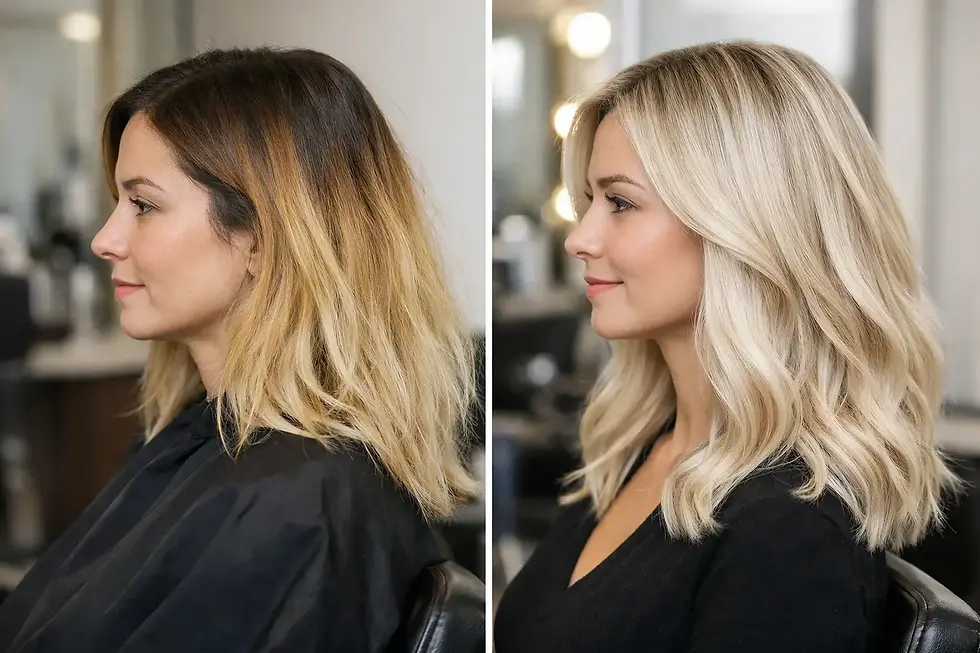
For a low-maintenance, natural finish, keep most of the depth through the root and mid-lengths, with delicate lightness concentrated around the face and towards the ends. This gives movement without losing the contrast that makes balayage look dimensional.
If you prefer a lighter overall look, more ribbons of colour can be worked through the interior as well as the surface. The trade-off is that brighter balayage often needs more regular toning and a more considered home-care routine to keep it looking fresh rather than brassy.
How to Choose Balayage Placement for Your Face
Face-framing balayage is not one-size-fits-all. The placement, width and brightness of the lighter pieces can subtly change how the face is perceived, so it is worth tailoring rather than following a trend exactly.
For a rounder face shape, brightness can begin slightly below the cheekbones and continue through the lower lengths. This creates a longer vertical line and avoids making the face appear wider. Softer, finer pieces near the root usually feel more flattering than a strong, high-contrast money piece.
For longer or more oval face shapes, a little more brightness around the cheekbones and sides of the face can bring balance. The colour can be diffused rather than pulled too far down, which helps keep the result soft and connected to the haircut.
A stronger face frame can be beautiful on clients who enjoy a polished, high-impact finish. It does, however, show regrowth and warmth more readily than a finely blended contour. If you wear your hair up often, ask for the front sections and hairline to be considered from every angle, not only when the hair is worn down.
Let Your Haircut Guide the Colour
Balayage should work with the movement already created by your cut. On long, layered hair, lightness can be placed through the ends of the layers to make the haircut look more textured and full. Too much colour in one solid band can flatten the shape and make even healthy hair look less natural.
For a blunt cut, placement needs to be especially intentional. Fine, vertical ribbons and a soft melt through the mid-lengths can preserve a clean, polished line, while overly chunky ends may make the haircut feel heavy. A subtle balayage is often the better choice here than very obvious colour blocks.
Clients with bobs, lobs or curtain fringes can benefit from brightness around the front and through the visible top layer. With shorter hair, there is less length to create a gradual transition, so refined blending matters even more. A few well-placed pieces can have more impact than trying to make every strand blonde.
Curly and textured hair needs placement that accounts for how the hair sits when dry. Colour painted only on stretched or wet hair may disappear within the curl pattern, while thoughtfully placed brightness can define the shape beautifully. This is why a consultation should include how you usually wear and style your hair.
Work With Your Natural Base, Not Against It
Your starting colour determines how far the hair can be lifted comfortably in one appointment and which tones will look believable. Darker brunette hair can look striking with caramel, toffee, honey or soft beige ribbons, while cooler beige tones may require more gradual lifting and careful toning.
If your natural hair is medium brown or dark blonde, a softer beige, mushroom or creamy balayage can create a very polished result without a dramatic contrast at the root. On naturally lighter hair, the focus may be less about lift and more about adding dimension, preventing the colour from becoming flat, or refining unwanted warmth.
It is tempting to ask for an icy blonde image regardless of your base, but healthy hair should always set the limit. A specialist will assess previous colour, porosity and elasticity before deciding what is realistic. Sometimes the best route is a gradual lightening plan, with treatments and trims between appointments, rather than pushing the hair too far in one session.
Consider Grey Blending and Regrowth
Balayage can be an excellent option when early greys are beginning to show, especially if you do not want the commitment of a full root colour every few weeks. Fine highlights around the parting and hairline can break up the contrast between silver strands and your natural base, making regrowth appear softer.
The right placement depends on where your grey is most visible. If it gathers at the temples, delicate face-framing highlights may make the biggest difference. If it is concentrated through the top and parting, finer woven sections through the crown can offer a more blended, forgiving finish.
Balayage is not designed to give complete grey coverage. If full coverage is your priority, a root colour or a combined colour service may be more suitable. The benefit of grey blending is the softer grow-out and less obvious maintenance line, but it works best when expectations are clear from the start.
Match the Placement to Your Lifestyle
The most beautiful balayage is one you can maintain comfortably. Think about how often you are happy to visit the salon, whether you use heated styling tools, and how much time you spend outdoors or travelling. Sun exposure, heat and frequent washing can all reveal warmth sooner, particularly in lighter pieces.
A lived-in balayage with a root melt and fine, diffused highlights can often be refreshed less frequently than a very bright blonde. You may still benefit from a toner or gloss appointment between major colour sessions, particularly if you like cooler tones. This keeps the finish refined without needing to relighten the hair each time.
Home care matters too. Professional shampoo and conditioner suited to coloured hair, a heat protectant and regular conditioning treatments will help preserve shine and softness. If your hair has been previously lightened, Olaplex or other bond-supporting care may be recommended as part of a healthy colour plan.
Bring Inspiration, But Keep the Consultation Personal
Photos are useful because they show the level of brightness, contrast and tone you are drawn to. Try to bring images of hair similar to your own starting colour and length, as well as a picture of your natural hair in daylight. This gives a more accurate starting point than an image of heavily styled hair under studio lighting.
During a proper consultation, your stylist should ask about previous colour, home colouring, extensions, hair condition and your usual styling routine. These details affect where colour can be placed safely and how it will look once you leave the salon. They also help avoid a result that is technically blonde but does not suit your everyday life.
Balayage placement is a small technical decision with a very visible effect. Choose a plan that suits your hair as it is now, respects its condition and gives you a finish you will enjoy seeing in the mirror between appointments.


Comments