

How to Choose the Right Balayage Hackney Salon

Choosing a balayage Hackney salon is about more than finding a beautiful before-and-after photo. The best result should suit your natural base, skin tone, lifestyle and hair condition, then grow out softly enough that it still looks considered months later. For clients travelling from Hackney, Shoreditch and across East London, a personalised approach makes all the difference.
Balayage can look effortless, but the work behind it is highly technical. Placement, lifting level, toning and the condition of the hair all affect whether the finished colour feels expensive and natural or becomes brassy, stripy or difficult to maintain.
What to expect from a balayage Hackney salon
A proper balayage appointment begins with a consultation, not a colour formula. Your stylist should look at your current colour, regrowth, previous lightening and any areas that feel dry or fragile. Hair that has been coloured at home, heavily highlighted or recently corrected needs a different plan from untouched virgin hair.
The conversation should also cover what you mean by “natural”. One client may want a soft sun-kissed lift around the face, while another wants a brighter blonde with a visible contrast from the root. Both can be balayage, but they require different placement and maintenance.
At Sara Styles Hair in Bethnal Green, the aim is wearable colour that looks right in real life, not only under salon lighting. That may mean preserving depth through the root area, concentrating brightness through the mid-lengths and ends, or creating a gentle face frame that lifts your complexion without over-lightening the rest of the hair.
Balayage is not one colour service
The word balayage is often used to describe any soft, blended blonde, but there are several ways to achieve that look. The right technique depends on your starting point and your goal.
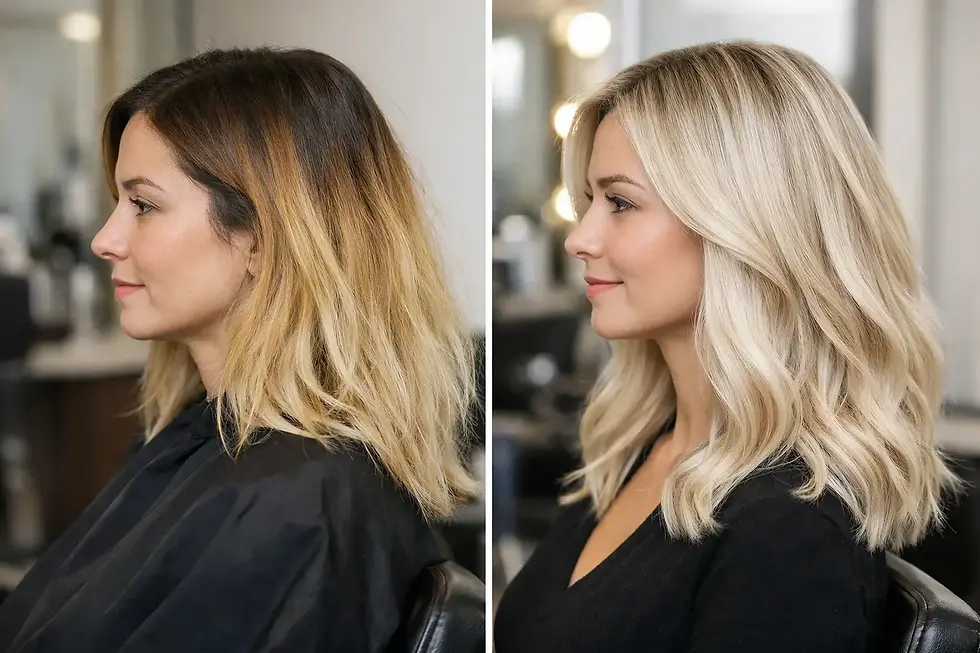
A lived-in balayage keeps more natural depth at the root and uses fine, diffused ribbons of lightness through the lengths. It is ideal if you want lower-maintenance colour and a softer grow-out. A brighter balayage may combine hand-painted sections with foils to lift darker or previously coloured hair more evenly. This can give a cleaner blonde result, but it may need more regular toning and conditioning support.
For brunettes, caramel, biscuit, honey and soft mocha tones can add movement without taking the hair too far from its natural depth. For blondes, the focus may be on removing dullness, blending old highlights and refining the tone rather than lightening every strand again. Grey blending can also be incorporated into balayage, helping early greys sit more softly against dimensional colour instead of creating a harsh line at the root.
The goal is not to copy a photograph exactly. Hair density, natural warmth, previous colour and the amount of lightness your hair can safely achieve will all influence the final result.
Why hair history matters before lightening
Balayage is a lightening service, and lightening always needs to be approached with care. If you have old box dye, uneven highlights, black colour, bleach damage or bands from previous appointments, your hair may not lift evenly in one sitting. A responsible stylist will explain this clearly rather than promise an unrealistic result.
Sometimes the best route is a gradual colour plan. The first appointment may focus on gently breaking up a dark band, correcting unwanted warmth or adding carefully placed brightness where it will make the biggest visual difference. Further appointments can build towards a lighter finish while protecting the hair’s integrity.
This is particularly important if your ends are dry or prone to snapping. More bleach is not always the answer. A well-placed balayage can create the impression of much lighter hair without processing every section. Bond-building care, including Olaplex where appropriate, and a considered home-care routine can help maintain strength between visits.
The difference between balayage and highlights
Traditional highlights generally start closer to the root and follow a more consistent pattern. They can be an excellent option for clients who like a brighter overall blonde, want to disguise grey regrowth or prefer a more regular maintenance schedule.
Balayage is usually more graduated. The lightness is painted or placed to create softness through the lengths, leaving selected areas deeper for dimension. This gives a more relaxed grow-out, although it does not mean no maintenance at all.
Many of the best colour results use a combination of techniques. Fine foils can provide controlled lift where needed, while balayage placement adds softness and movement. A root melt or gloss can then connect the colour, refine warmth and create that polished finish. The technique matters less than whether the colour plan suits your hair.
Questions worth asking at your consultation
A trusted stylist should make space for questions and give you honest answers. Ask how many appointments may be needed to reach your colour goal, particularly if you are correcting old colour. Ask how often you will realistically need toner, glossing or refreshing appointments, and what at-home routine is recommended for your hair type.
It is also sensible to ask what can be achieved without compromising condition. This is not a negative answer if the stylist advises a slower approach. It is usually a sign that they are planning for your hair beyond the first appointment.
Bring a few reference images, but include pictures of your own hair in natural daylight too. Inspiration photos help communicate the finish you like, while your own hair tells the real story of what is possible. Be open about previous colouring, keratin treatments, extensions and home products. Those details help your stylist make safer decisions.
Maintaining balayage between appointments
The beauty of balayage is that it can grow out with less obvious regrowth than an all-over blonde. However, maintaining its tone and shine still takes some care. Blonde and lighter brunette shades can pick up warmth over time, especially with hard water, heat styling and regular sun exposure.
A salon gloss or toner can refresh the shade between larger lightening appointments. This is often enough to bring back softness and brightness without putting your hair through another full colour service. Your stylist may recommend a purple or blue-toned shampoo if suitable, but it should not be overused. Too much can leave porous hair looking flat, smoky or uneven.
Heat protection, gentle cleansing and regular conditioning are equally important. If your hair is already dry, choose moisture and repair over constantly trying to make it lighter. Healthy, reflective hair makes balayage look more expensive because it shows the dimension in the colour.
When balayage may not be the best choice
Balayage is versatile, but it is not automatically the best service for every goal. If you want very pale blonde from root to tip, traditional highlights or a more structured blonding service may be more suitable. If your priority is covering a high percentage of grey at the root, balayage alone may not give enough coverage, although it can work beautifully alongside grey blending.
Clients with very dark artificial colour, significant breakage or a sensitive scalp may need a different approach first. A cut, conditioning plan, gradual correction or a richer gloss can improve the overall look while creating a safer route towards future lightening.
The most flattering balayage is not always the brightest one. It is the colour that complements your features, keeps the hair looking healthy and still feels like you when you leave the salon. A calm, detailed consultation is the best place to start that process.


Comments