
How to Fix Bad Hair Colour in London

Updated: May 24

Bad colour usually feels urgent. Whether your blonde has gone yellow, your brunette has turned flat, or a box dye has left bands and patchiness, the first instinct is often to do something quickly. If you are trying to fix bad hair colour in London, the best next step is not another at-home attempt - it is understanding what went wrong, what your hair can safely handle, and what a proper correction should look like.
Colour correction is not a standard colour appointment with a different name. It is a specialist service that combines technical judgement, product knowledge and a realistic plan for getting your hair back to a result that looks polished, wearable and healthy.
What counts as bad hair colour?
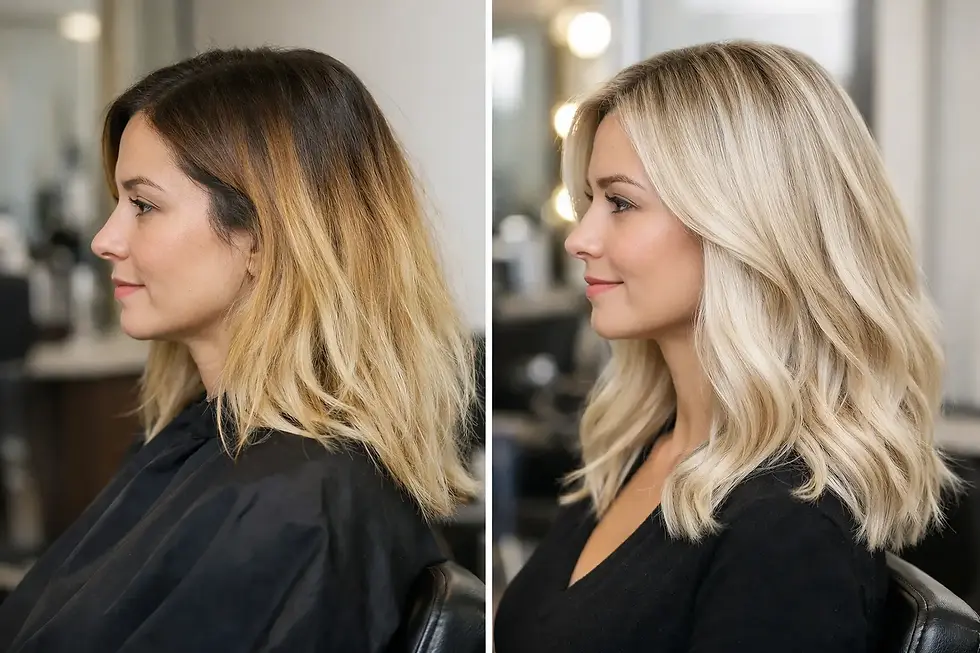
Not every disappointing appointment needs a full correction. Sometimes the issue is a simple toner adjustment. In other cases, the colour itself is fine but the finish is too warm, too dark or not flattering against your skin tone. A true correction is usually needed when the colour is visibly uneven, damaged, over-processed or far away from the result you asked for.
That might mean stripy highlights, muddy blonde, harsh regrowth lines, orange bands, green tones, patchy bleach lift or ends that are grabbing colour differently from the rest of the hair. It can also include previous extension clients whose natural hair and added hair no longer blend because the base shade has shifted.
The reason this matters is simple - the fix depends entirely on the cause. Hair that is too dark needs a very different approach from hair that is too warm. Hair that has been bleached repeatedly needs a different plan again.
Why bad colour happens so often
Most colour mistakes are not random. They usually come from one of three things: poor consultation, poor application or unrealistic expectations.
Consultation matters because the starting point changes everything. If your hair has old tint on the ends, previous bleach underneath, or years of home colour build-up, the hair will not lift evenly. Without a clear assessment, the final result can easily turn patchy or brassy.
Application matters because timing, saturation and sectioning affect the outcome more than most clients realise. Even a good formula can produce poor results if it is placed incorrectly or left on the wrong areas for too long.
Then there is expectation. A cool, creamy blonde in one appointment may be possible on healthy hair with the right base. On darker, compromised or heavily coloured hair, pushing too hard too fast often creates the exact problem clients are hoping to avoid.
How to fix bad hair colour in London without making it worse
The hardest part of colour correction is restraint. When you dislike your hair, it is tempting to tone over it, bleach it again or cover it with a darker shade at home. That can make the next professional correction more complicated.
If your colour has gone wrong, avoid layering on more dye unless a specialist has advised you to. Extra pigment can create build-up, and extra lightener can push fragile hair past the point where it can be corrected safely in one session.
Instead, focus on preserving the condition of your hair before your appointment. Use gentle cleansing, reduce heat styling and be honest about everything that has been used on your hair, including box dye, glosses, toners and colour-depositing masks. The more accurate the history, the better the correction plan.
What a proper correction appointment should involve
A good corrective colour service starts with assessment, not promises. Your stylist should look at the current tone, level, porosity, breakage risk and any existing bands or overlaps. They should also ask what result you actually want, because fixing colour does not always mean chasing the lightest or coolest option.
In many cases, the healthiest and most flattering outcome is a more balanced tone with shine and dimension, rather than an aggressive lift. Sometimes the best correction is softening contrast, refining warmth and restoring condition so the hair looks expensive again.
Expect a staged approach
This is where experience matters. Some corrections can be completed in one long appointment. Others need two or three sessions, especially when the hair has been repeatedly coloured, badly lightened or weakened.
A careful stylist will explain that upfront. That is not a sales tactic. It is usually a sign that they are protecting your hair instead of forcing an unrealistic result in a single visit.
Toner is not always the answer
Clients often ask for a toner when the real issue is uneven lift underneath. Toner can refine tone, but it cannot fully correct patchiness, heavy banding or deep orange warmth caused by underlying pigment that has not been lifted enough.
Used well, toner is the finishing stage. Used as a shortcut, it can leave you with duller, darker or muddier colour after a few washes.
The trade-off between colour goal and hair condition
This is the part many salons gloss over. You can usually push harder for a faster visual change, or you can protect the integrity of the hair. Sometimes you can do both, but not always.
If your ends are already porous, brittle or stretched from previous bleaching, the smartest correction may be to adjust the tone, blend the root and remove damaged length over time. That can feel slower than you hoped for, but it often gives a better final result than one dramatic appointment followed by breakage.
For women who wear extensions or are thinking about them, this matters even more. The natural hair needs to be healthy enough to support the finished look. Correcting the colour while ignoring the condition can undermine everything else.
Choosing a specialist for bad hair colour correction
If you need to fix bad hair colour in London, look for someone who treats corrective work as a specialist service rather than a standard colour add-on. The signs are usually clear. They ask detailed questions. They want to see your hair in natural light. They talk honestly about limitations. They explain timing and maintenance without overcomplicating it.
Portfolio matters too, but not just dramatic before-and-afters. You want to see clean blondes, polished brunettes, even blending and healthy-looking shine. Corrective colour should still look elegant and wearable, not just technically improved.
For clients in East London who want a more personal, one-to-one approach, boutique salons can be a strong fit because the service tends to be more tailored. At Sara Styles Hair, corrective appointments are approached with that specialist mindset - focused on precision, condition and a result that feels like you again.
Questions worth asking before you book
A consultation should leave you clearer, not more confused. Ask whether your goal is realistic in one appointment, what could affect the final result, how your hair condition will shape the plan, and what maintenance will be needed afterwards.
You can also ask whether a strand test is recommended. In corrective work, that can be useful where there is unknown colour history or significant risk of uneven lift.
The right stylist will not rush these answers. They should make you feel informed and reassured, especially if you have already had one disappointing experience.
Aftercare matters more than most people think
A colour correction does not end at the basin. Freshly corrected hair often needs better maintenance than clients are used to, especially if lightening was involved.
That usually means protecting tone, keeping moisture and protein balanced, and being sensible with heat. If your hair has been brought back from a difficult starting point, the goal is to keep it looking expensive between appointments, not just good for the first week.
This is also why an honest maintenance plan matters. Some results need glossing, root blending or regular toning. Others are designed to grow out more softly with less salon upkeep. Neither is better by default - it depends on your lifestyle, budget and how polished you want the colour to stay.
Bad hair colour can feel personal. It affects how you get dressed, how confident you feel at work, and whether you want your photo taken at all. The good news is that most colour mistakes can be improved with the right technical approach and a bit of patience. The aim is not simply to correct what went wrong, but to get you back to hair that looks refined, feels healthier and suits you properly.
See Real Results
Explore real client results from Sara Styles Hair in East London: View on Instagram
Book Your Appointment
Book your appointment at Sara Styles Hair in Bethnal Green, East London: Book Now


Comments