

Olaplex Versus Keratin: Which Is Right for You?

A client with highlighted hair and rough, fluffy ends does not necessarily need the same treatment as someone with healthy hair that becomes unmanageable in damp weather. That is the key difference in the olaplex versus keratin conversation: one is primarily about supporting damaged bonds, while the other is designed to smooth and soften the hair’s texture.
Both can make a real difference to how hair looks and feels, but they solve different problems. Choosing well matters, particularly if your hair is coloured, lightened, naturally curly, fine, or worn with tape extensions.
Olaplex versus keratin: the main difference
Olaplex is a bond-building treatment. During lightening, colouring, heat styling and everyday wear, some of the internal bonds that give hair its strength can become compromised. Olaplex is designed to help reconnect broken disulphide bonds, supporting stronger-feeling, more resilient hair.
Keratin treatment is a smoothing service. It works on the outer structure of the hair to reduce frizz, soften texture and make styling easier. The result is usually glossier, sleeker hair with less expansion in humidity. Depending on your starting texture and the formula used, it may also loosen curl or wave temporarily.
Put simply, Olaplex is usually the more relevant choice when your main concern is damage and breakage. Keratin is often the better fit when your hair feels healthy enough but takes too much effort to smooth, blow-dry or control.
Neither should be treated as a one-size-fits-all answer. Hair can be dry without being structurally damaged, and it can be strong but still very frizzy. A proper consultation looks beyond the surface finish and considers your colour history, density, natural texture, home routine and styling habits.
When Olaplex is the better choice
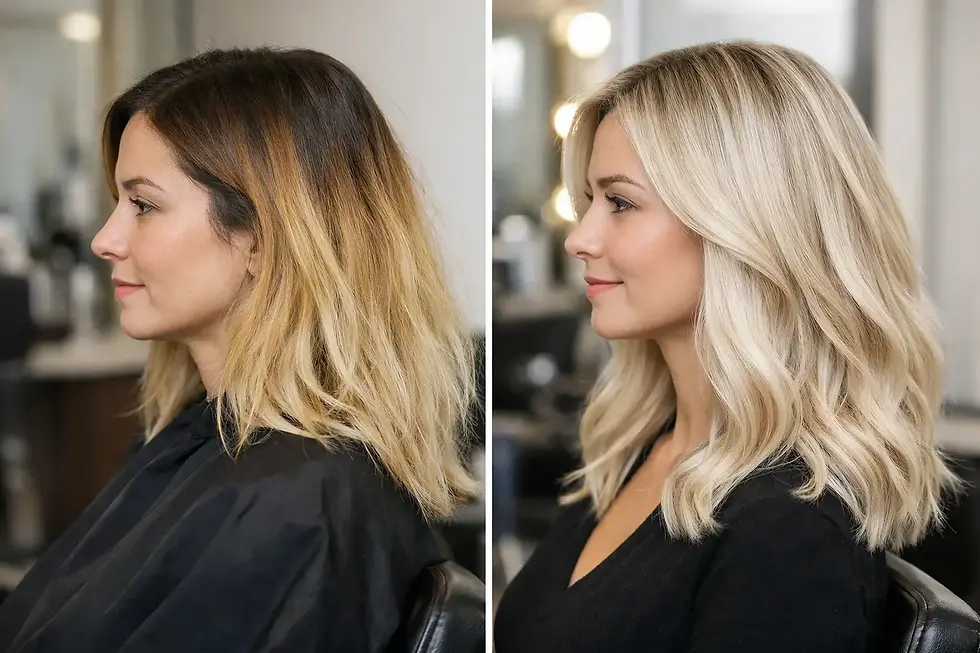
Olaplex is particularly useful for clients who colour their hair regularly, have balayage or highlights, or are planning a significant colour change. It is often used within a professional colour appointment to help support the hair through the chemical process, rather than simply being added after damage has already occurred.
If your hair snaps easily, feels stretchy when wet, looks dull through the mid-lengths, or has become harder to grow beyond a certain point, bond care may be more appropriate than a smoothing treatment. It will not turn severely damaged hair back into virgin hair, but it can be a valuable part of a realistic repair and maintenance plan.
The visible result is generally healthier-looking hair: improved softness, shine and manageability without changing your natural wave or curl pattern. This makes it a strong option for clients who love their texture but want it to feel less fragile after lightening or frequent heat styling.
At Sara Styles Hair, Olaplex can be considered alongside colour services rather than as an afterthought. For example, a lived-in blonde refresh may need careful lightening placement, a toner suited to your complexion and bond support to keep the finish polished without pushing the hair too far.
What Olaplex will not do
Olaplex is not a straightening treatment. It may make damaged hair easier to style because it feels smoother and less porous, but it will not remove humidity-driven frizz in the way a keratin treatment can. If your main frustration is spending 40 minutes blow-drying thick, coarse hair, Olaplex alone may not give you the change you are hoping for.
It also cannot replace sensible aftercare. Regular trims, appropriate heat protection, gentle detangling and a colour plan that respects your hair’s limits are still essential. Healthy hair is usually the result of consistent decisions, not one miracle appointment.
When a keratin treatment is the better choice
A keratin treatment is ideal when your hair is difficult to smooth, prone to fluffiness or affected by humidity. It can reduce drying time, make blow-dries more manageable and give the ends a more polished appearance. For busy professionals, that lower-maintenance finish can be the real benefit.
It is especially popular for hair that is naturally wavy, coarse or frizzy but otherwise in reasonable condition. The goal does not have to be pin-straight hair. A well-chosen keratin service can retain movement while making the texture feel softer and more controlled.
Results normally last for several weeks to a few months, depending on the treatment, your hair type and aftercare. Washing frequency, swimming, heat styling and product choice all influence longevity. Sulphate-free, salon-recommended home care is often advised to help preserve the smoother finish.
A keratin treatment should always begin with a close look at the hair. If your hair is very compromised from bleaching or colour correction, adding another chemical service may not be the right first step. In that situation, improving condition before pursuing texture smoothing is often the more careful route.
What to expect from keratin
Keratin treatments vary, so expectations should be specific to the product and your hair. Some formulas create a noticeably straighter result, while others focus more on frizz reduction and shine. The service usually involves applying the treatment, blow-drying the hair and sealing it with controlled heat.
Heat is an important part of the process, which is why technical application matters. The hair needs enough heat to activate the treatment, but not excessive passes that leave already sensitised ends feeling dry. For clients with fine highlighted hair, the approach should be considered rather than automatic.
If you have a sensitive scalp, allergies, respiratory sensitivities or are pregnant, mention this before booking. Your stylist can discuss whether the chosen service is appropriate and whether a patch test or alternative approach is needed.
Can you have Olaplex and keratin together?
In some cases, yes, but timing and hair condition matter. They are not competing treatments in the sense that one cancels out the other. Olaplex supports the internal structure of the hair, while keratin focuses on surface smoothness and manageability.
However, combining services is not always necessary or advisable at the same time. Hair that has been heavily lightened may benefit from a period of bond care, hydration and gentle handling before a keratin service is considered. Equally, someone with healthy but very frizzy hair may not need extensive repair work before smoothing.
A tailored plan can be more effective than booking everything at once. This might mean supporting hair during a colour appointment, assessing how it responds over the following weeks, then deciding whether a keratin treatment would add a worthwhile benefit.
What about coloured hair and tape extensions?
For coloured hair, both services need careful planning. Olaplex is often a useful partner to balayage, highlights and corrective colour because lightening can place stress on the hair. Keratin can make coloured hair look beautifully glossy, but it should be selected and applied with attention to porosity, previous chemical work and the timing of your colour appointments.
If you wear tape extensions, always mention them before booking either treatment. Treatments should not be applied carelessly onto the adhesive tabs, and high heat near the bonds needs to be managed properly. Extensions also have different care needs from your natural hair, so a service must protect both the blend and the attachment points.
For clients in Bethnal Green, Shoreditch and Hackney who invest in colour or extensions, this is where a one-to-one specialist approach is valuable. The best-looking result is not simply shinier hair on the day. It is hair that remains wearable, blends naturally and can be maintained confidently between appointments.
How to choose the right treatment for your hair
Start with the result you actually want. If you want to preserve your natural texture but your hair feels weak, dry or overprocessed, Olaplex is likely the more relevant conversation. If you want calmer, smoother hair that is quicker to style, keratin may be the better direction.
Then consider your colour history honestly. Recent bleaching, repeated home colouring, box dye removal and past breakage all affect what your hair can comfortably handle. A skilled stylist should be willing to recommend a slower route when that is what protects the quality of your hair.
Your daily routine matters too. Keratin suits clients who want a reduced-effort finish and are prepared to follow the recommended aftercare. Olaplex suits clients committed to improving condition over time, especially where regular colour maintenance is part of their look.
The right treatment should make your hair feel more like itself, only easier to wear. Whether that means stronger blonde lengths, softer curls or a smoother blow-dry, the most confidence-building result is one that respects the condition of your hair first.


Comments