

Toner Versus Gloss: Which Finish Suits You?

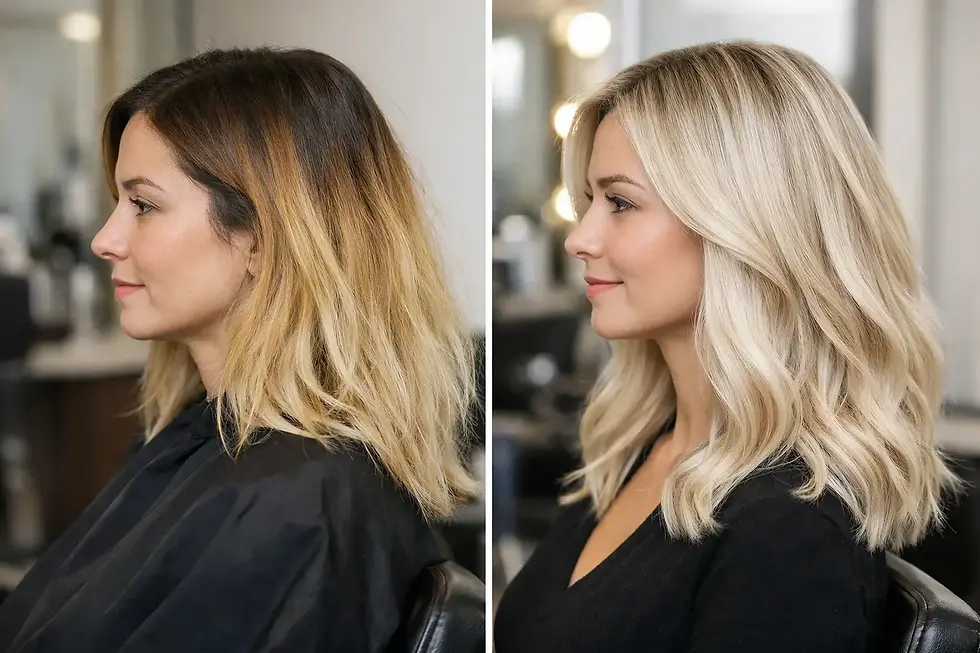
Fresh balayage can look beautifully expensive one week, then a little too warm, flat or brassy the next. That does not necessarily mean your colour needs to be redone. In the toner versus gloss conversation, both services can refresh your result, but they are chosen for slightly different reasons. The right one depends on your existing colour, the condition of your hair and the finish you would like to see in the mirror.
What is a toner?
A toner is a professional colour service used to adjust the tone of lightened, coloured or naturally grey hair. It is most often applied after highlights, balayage, a full blonding service or colour correction, when the hair has been lifted and needs refining.
If your blonde is pulling yellow, your brunette balayage is turning orange, or your grey blend needs to look softer and more intentional, a toner can help counteract unwanted warmth. Violet-based tones are often used against yellow, while blue or ash tones can help soften orange warmth. The formula is selected for your hair specifically, rather than simply applying the coolest possible shade.
A good toner should not make everyone look icy. For some clients, a creamy beige blonde, warm honey finish or neutral mushroom brunette is far more flattering and wearable. The aim is to create a polished colour that suits your skin tone, lifestyle and maintenance preference.
What is a hair gloss?
A gloss is generally used to add shine, softness and a more refined surface to the hair, while also enhancing or adjusting the colour. It is often a demi-permanent service, meaning it gradually fades rather than growing out with a strong line at the root.
A clear gloss may be used where the colour is already right but the hair looks dull or feels slightly rough after colouring, heat styling or day-to-day wear. A tinted gloss can deepen a brunette, revive a faded red, enrich a copper or bring a beige, caramel or golden dimension back to balayage.
Many clients notice that a gloss makes the hair look healthier because it gives the lengths a smoother, more light-reflective finish. It is not a repair treatment in itself, but it can make well-conditioned hair look particularly glossy and help a colour feel freshly finished again.
Toner versus gloss: the practical difference
The distinction is not always as clear-cut as social media makes it sound. Different colour brands and salons use the words toner, glaze and gloss in different ways. Some gloss formulas are used to tone blonde hair, while some services described as toners also leave the hair feeling very shiny.
The most useful difference is the intention behind the appointment. A toner is usually selected to correct or refine an unwanted tone after lightening. A gloss is often selected to refresh the overall look, boost shine and gently enhance the colour already there.
For example, if your bright blonde has turned noticeably yellow after a few weeks, a toner-focused refresh may be the best fit. If your brunette colour has faded and lost its richness, a chocolate or neutral gloss can restore depth and shine without a full colour appointment. If you have balayage that looks a little dry and lacklustre but not overly warm, a clear or softly tinted gloss may be enough.
In practice, the service can overlap. The formula matters more than the label. A specialist stylist will look at the underlying warmth in your hair, your previous colour history and the result you want before deciding what to apply.
Which service is best for balayage and blonde hair?
Balayage often needs toning because the lightened sections naturally reveal warmth as the salon finish fades. This is especially common with dark natural bases, where the hair passes through warm underlying pigments during lifting. Trying to keep every blonde extremely ash can lead to a dull or slightly grey cast, particularly if the hair is porous.
A personalised toner can keep the blend soft at the root and bright through the ends, without taking away the dimension that makes balayage look natural. For clients who prefer a lived-in blonde, a beige or neutral toner often grows out more softly than a very cool finish.
A gloss can be a lovely choice between bigger balayage appointments when you want the lengths to look smoother and more reflective. It can also soften the contrast between blonde pieces and a darker base, helping the colour look blended rather than stripey. If the blonde is both warm and dull, a tonal gloss may be the right answer.
At Sara Styles Hair, colour refresh appointments are approached with the same care as the original colour. Small adjustments can make a major difference to how polished your hair feels between full services.
Can toner or gloss cover grey hair?
Neither is usually the best choice if you want complete, permanent grey coverage at the root. However, both can be useful for grey blending. A demi-permanent gloss can soften the contrast between natural grey and coloured hair, add a more even tone through faded lengths and create a lower-maintenance grow-out.
This works particularly well for clients who do not want a solid block of root colour every few weeks. Instead of chasing full coverage, the focus can be on making the grey look intentional, blended and flattering alongside highlights or a softer root melt.
The trade-off is longevity. Grey hair can be resistant, and a gloss will fade gradually. If your priority is maximum coverage, a permanent root colour may still be recommended, with a gloss through the lengths for condition and shine.
How long do toner and gloss results last?
Most toners and glosses last around four to eight weeks, although there is no single answer for every head of hair. Very porous blonde hair may grab tone strongly at first, then release it more quickly. Frequent washing, hot tools, hard water, holidays and strong shampoos can all affect how long the finish stays fresh.
Richer brunette and copper glosses may fade more visibly because they deposit noticeable pigment, while a clear gloss fades subtly as the shine effect softens. A toner on very pale blonde hair can also shift over time, especially if the hair is exposed to minerals or styling products.
Using colour-safe shampoo, washing in lukewarm rather than very hot water and adding heat protection will help. Purple shampoo can be useful for some blondes, but it should not replace salon toning or be overused. Too much can leave pale, porous sections looking dull or slightly violet.
Is toner or gloss damaging?
When correctly formulated and applied, toner and gloss are usually gentler than lightening services because they do not need to lift the hair in the same way bleach does. They can be a sensible way to refresh your colour without repeatedly processing it.
That said, hair condition always matters. If your lengths are very dry, over-lightened or unevenly porous, they may absorb pigment differently. A skilled stylist may adjust the formula, timing or shade selection to avoid the ends looking too dark, muddy or cool.
For damaged hair, a colour refresh is often paired with a tailored conditioning approach. Bond-building treatments such as Olaplex can support hair that has been lightened, while regular trims and a realistic colour plan help keep the overall finish healthy. A gloss can improve the appearance of shine, but healthy-looking hair starts with protecting its condition between appointments.
Choosing the right refresh appointment
Bring clear, realistic reference images, but also be open about what you like and dislike in your current hair. Do you feel too warm? Too flat? Too dark at the ends? Are you trying to blend grey, make your balayage look freshly done or simply get more shine before an event? These details guide the service better than asking for a toner or gloss by name.
For clients in Bethnal Green and nearby East London, an in-person colour consultation is especially valuable if you have old box dye, previous bleach, extensions or a colour correction history. What looks like fading may be a build-up issue, uneven porosity or underlying warmth that needs a more considered plan.
The best refresh is the one that makes your existing colour look deliberate again while respecting the condition of your hair. Whether that is a toner, a gloss or a combination of both, a subtle professional adjustment can give you the shine, softness and confidence to enjoy your colour for longer.


Comments