

A Colour Correction Makeover Example Explained

A colour correction makeover example is rarely about covering a problem with a darker shade and hoping for the best. The most convincing transformations come from understanding what is already on the hair, protecting its condition and creating a result the client can realistically maintain.
This is the kind of work many clients seek after a disappointing colour appointment: visible bands through the mid-lengths, brassy warmth around the face, patchy highlights or blonde ends that feel dry and fragile. At Sara Styles Hair in Bethnal Green, colour correction is approached as a considered plan, not a rushed fix.
A Colour Correction Makeover Example: The Starting Point
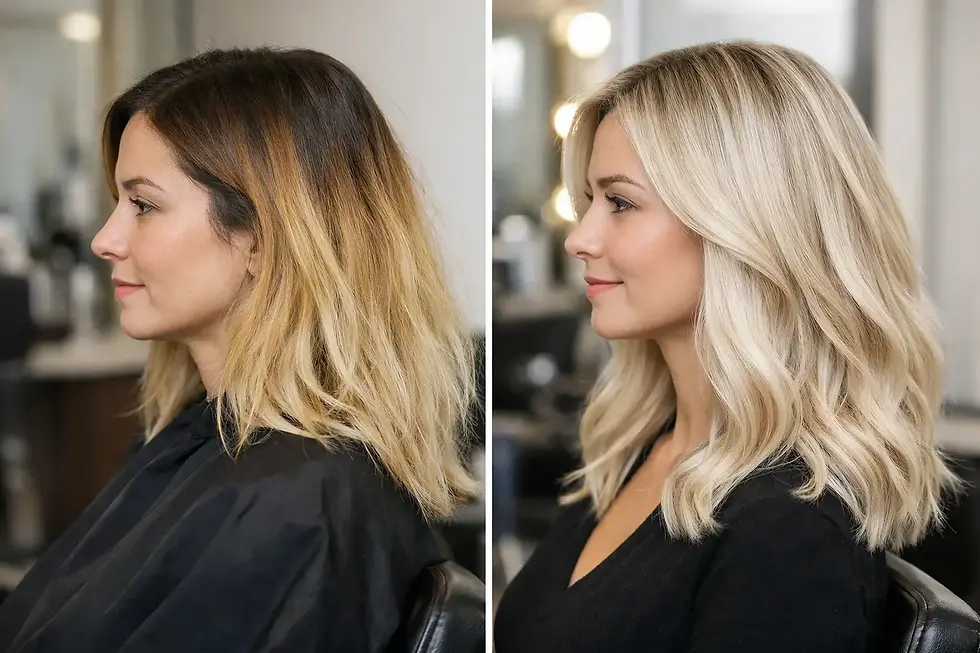
Imagine hair that has been highlighted several times over the years. The roots have grown through dark, the mid-lengths hold a strong golden band from a previous lift, and the ends are much lighter but porous. In daylight, the colour looks uneven rather than intentionally dimensional.
The client wants a softer, expensive-looking blonde with brightness around the face, but does not want an icy finish that will be difficult to keep toned. Her priority is hair that looks polished and feels healthier, without committing to an all-over bleach appointment.
That brief matters. A good correction should reflect how someone wears their hair in real life, how often they can return to the salon and what their hair can safely tolerate. Trying to remove every trace of warmth in one session can compromise the condition and create another correction appointment later.
The Consultation Comes Before the Colour
Before mixing colour, I assess the hair in sections. Previous colour history, home colouring, heat styling, water quality and how the hair behaves when wet all affect the safest route forward. A strand test may be needed where there is uncertainty about old box dye, very light ends or chemical services.
The key question is not simply, “What shade do you want?” It is, “What can your hair achieve today while staying in good condition?” That honest conversation is particularly valuable when hair has been over-processed or when there are multiple bands of colour to work through.
For this type of makeover, the plan may be to break up the darker root area with fine highlights, soften the warmer middle band with controlled placement, and protect the lightest ends from unnecessary lifting. Rather than chasing one flat shade from roots to ends, the aim is a blended colour that makes the previous work disappear.
Building a Softer, More Wearable Blonde
The correction starts with precise sectioning and strategically placed foils. Fine highlights through the crown and around the face can brighten the overall look without lightening every strand. A few carefully positioned lowlights may also be used to restore depth where the ends have become too pale or hollow.
This is where technical judgement makes a visible difference. The warmer band may need more attention than the already-light lengths, while fragile ends need far less processing time. Colour is monitored throughout rather than applied with a one-formula approach.
Once the hair has lifted to a suitable level, glossing is used to bring the colour together. A soft beige, creamy neutral or natural honey tone can refine unwanted brassiness while keeping the result believable against the skin tone. Toner is not a permanent solution to overly warm underlying pigment, but used well, it gives the hair a balanced, polished finish.
The final result is not necessarily a dramatic white blonde. It is a softer blend: a diffused root, cleaner brightness through the front and a natural transition into lighter lengths. When the client moves her hair, there is dimension rather than obvious lines.
Why One Appointment Is Not Always the Right Answer
Some colour corrections can be completed beautifully in one long appointment. Others are better approached across two or more sessions, especially where dark artificial colour needs lifting or the hair feels compromised.
A staged plan is not a lesser result. It is often the more specialist choice. It allows the hair to recover, gives us a clearer view of how the previous colour is reacting and avoids pushing delicate areas beyond their limit.
For example, the first appointment may focus on softening harsh bands, refreshing the tone and improving condition. A later appointment can add further brightness once the hair is stronger. The client still leaves with a noticeable improvement after the first visit, but without sacrificing the long-term health of the hair for a quicker photograph.
Condition Is Part of the Makeover
A colour correction should not finish when the foils come out. The treatment, cut and styling choices matter just as much to the finished result.
Bond-building care such as Olaplex can support hair during a technical colour service, particularly where previous lightening has left the lengths feeling vulnerable. It is not a substitute for careful colouring, but it is a valuable part of looking after processed hair. A well-chosen gloss also helps the surface look smoother and more reflective, which makes the colour appear richer.
A small trim or reshaping can remove the driest ends and give the new colour a cleaner outline. For clients wanting extra fullness while growing out damaged lengths, professionally fitted tape extensions can be considered once the natural hair is in suitable condition. The priority is always a secure, natural-looking result that does not place strain on fragile hair.
What Makes the Result Last
A successful correction needs a maintenance plan that suits the client, not an unrealistic salon schedule. A root smudge or lived-in blend can make regrowth far more forgiving than a solid lightened root, which is useful for busy professionals across Shoreditch, Hackney and East London.
At home, use colour-safe shampoo, avoid very hot water and apply heat protection before blow-drying or styling. Purple shampoo can be helpful for some blondes, but it should not be overused. Hair that is very porous can pick up too much violet pigment and start to look dull or uneven.
A gloss refresh between highlight appointments can keep the tone looking expensive and fresh, while regular conditioning treatments help maintain softness. The exact timing depends on the chosen shade, the client’s natural root colour and how much brightness they prefer around the face.
The Difference Between Covering Up and Correcting
It can be tempting to put a darker colour over uneven blonde because it seems quicker. Sometimes going darker is the right choice, particularly if the hair needs a break from lightening. But a one-step darker colour can fade unpredictably over porous ends or leave the original bands visible underneath.
True colour correction considers the canvas, the desired finish and the next appointment as well as the current one. It may involve adding depth, lifting selected areas, neutralising warmth and adjusting the cut so the whole look feels intentional.
The best makeover is the one that gives you confidence when you leave the chair and still looks good weeks later. If your colour feels patchy, overly warm or no longer reflects how you want to look, a personal consultation can turn a difficult starting point into a clear, achievable plan.


Comments