

A Practical Guide to Colour Correction

Bad colour rarely looks bad in just one way. It can be too dark at the ends, too warm at the root, patchy through the mid-lengths, or simply not what you asked for. This guide to colour correction explains what a correction actually involves, why it should never be rushed, and how a specialist stylist plans a result that looks polished while keeping the hair in the best possible condition.
For many clients, the hardest part is not the colour itself but the uncertainty. You may have box dye build-up, banding from previous appointments, faded balayage, over-toned blonde or grey coverage that has gone flat and heavy. Each of those needs a different approach. Colour correction is not one set service. It is a tailored process based on your current hair, your colour history and what your hair can realistically handle.
What colour correction really means
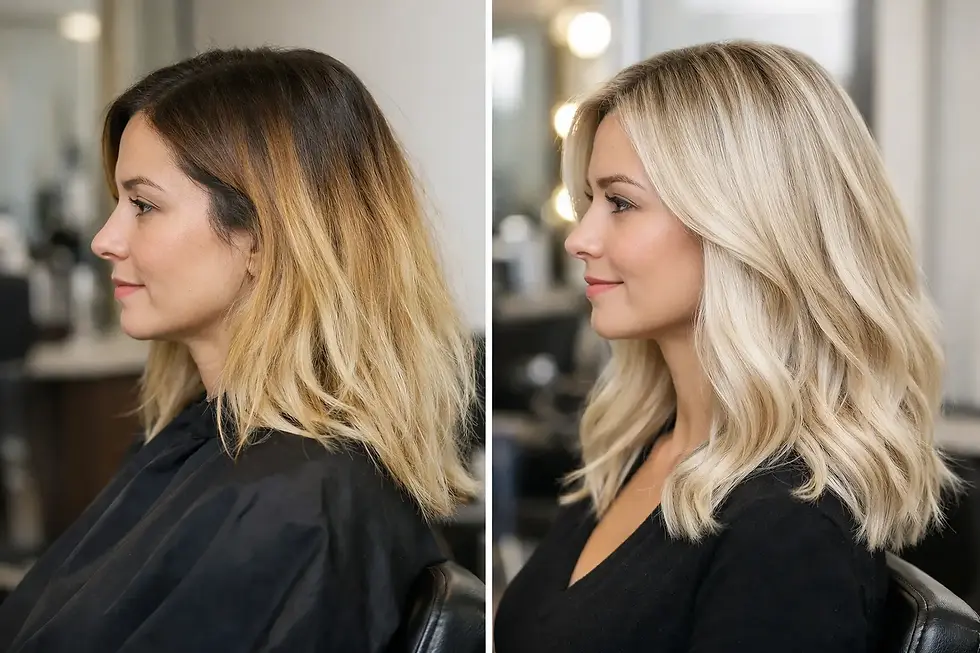
Colour correction is the process of adjusting unwanted tone, depth or placement to create a more balanced and wearable result. Sometimes that means removing darkness. Sometimes it means softening brassiness, blending uneven highlights, reworking patchy bleach or breaking up solid colour so it looks more natural.
The important part is that correction is both technical and visual. A good result is not only about lifting or darkening the hair. It is about choosing the right tones, protecting the condition, and creating a finish that suits your skin tone, haircut and maintenance routine.
In a specialist setting, correction starts with assessment rather than application. That includes looking at porosity, previous colour history, areas of overlap, hidden damage and the difference between what the hair looks like dry and how it reacts once colour work begins. This is one reason corrective work can take longer than clients expect.
A guide to colour correction starts with honesty
The consultation matters more than any formula. If your hair has had box dye, bleach, henna, toner layering, sun exposure or regular heat damage, that changes the plan. The more accurate the history, the safer and more precise the correction.
Clients sometimes worry that telling a stylist about home colour will mean being judged. It should not. In reality, that information helps avoid breakage, patchiness and unrealistic promises. A calm, honest consultation gives you a clearer idea of what can be achieved in one appointment and what may need to happen over two or three visits.
This is especially important if your goal is a brighter blonde, softer balayage or a cleaner, cooler brunette. Hair that has been coloured repeatedly often holds onto artificial pigment in uneven ways. One section may lift quickly while another barely moves. That is where specialist planning makes the difference.
The most common correction problems
A lot of corrective colour falls into a few familiar patterns, although the solution still varies from client to client.
Dark box dye is one of the most common. It often leaves a build-up through the ends, with lighter or warmer areas near the root. Trying to strip that out in one go can leave the hair rough and uneven, so the aim is usually controlled lightening and careful re-toning rather than an aggressive all-over removal.
Another common issue is banding. This is where visible lines of colour sit through the hair, often from overlapping bleach or inconsistent home application. Banding needs precision. If it is handled too strongly, you can end up with bright stripes against fragile hair.
Brassy blonde is also very common, but not every warm blonde needs heavy ash toner. Sometimes the real issue is poor lift, old mineral build-up, faded gloss or over-processed ends that no longer hold tone evenly. In those cases, using stronger cool pigment alone can leave the hair dull or muddy.
Then there is patchy balayage or highlights that have grown out with no softness. A correction may involve rebalancing the placement, adding depth back in, and refining face-framing pieces so the result looks intentional rather than striped.
Why hair condition comes before speed
Clients usually come in wanting the unwanted colour gone as soon as possible. That makes sense, especially if the hair feels hard to wear or difficult to style. But correction done too fast often creates a second problem.
Lightening compromised hair without respecting its condition can lead to breakage, excessive dryness and a result that still does not look even. Healthy-looking hair reflects light better, holds tone more evenly and feels more expensive overall. That is why bond-building support, thoughtful product choice and realistic timing matter just as much as the final shade.
In some cases, the best professional advice is to improve the hair first and finish the colour goal in stages. That may include treatments such as Olaplex support during colour work, a gloss to rebalance tone, a softer root area, or a strategic cut to remove the weakest ends. It depends on what your hair needs, not simply what the inspiration photo shows.
How a specialist plans the correction
A strong colour correction usually follows a sequence rather than a single formula. First comes analysis of the current base, unwanted tones and previous artificial pigment. Then the stylist decides what needs lifting, what needs neutralising, and what should be left alone to protect the hair.
After that, placement becomes important. Not all areas need the same formula or the same processing time. Roots, mid-lengths and ends often behave differently. Porous sections can grab toner fast, while darker bands may need more work. This is why corrective services are rarely standard-price, one-size appointments.
The final step is refinement. Once the unwanted issue is removed or softened, the hair needs to be brought back together visually. That may mean glossing, lowlighting, root shadowing, grey blending or reworking the overall tone so the result looks natural and polished.
For clients in Bethnal Green, Hackney and surrounding parts of London, this tailored approach is often what feels most reassuring. You are not being pushed into a generic colour service. You are getting a plan based on what your hair is actually doing.
What to expect from your appointment
Corrective appointments are usually longer than regular colour visits, and they may involve more than one stage on the day. That can include strand testing, colour removal, careful lightening, toning, treatment work and trimming where needed.
You should also expect a realistic conversation about outcomes. Sometimes the target can be reached in one sitting. Sometimes the safer and better-looking route is a phased correction. That is not a compromise. It is often what gives the most expensive-looking result in the end, because the hair still moves, shines and feels healthy.
Photos are useful, but they work best when treated as a reference rather than a promise. The same shade will look different depending on your starting point, natural base, density and previous colour history.
Aftercare matters more than people think
Once the correction is complete, maintenance helps protect both the tone and the condition. Sulphate-free cleansing, heat protection and sensible washing routines all help. If your hair has been lightened, purple or blue shampoo may be useful, but only if it suits the tone your stylist has created. Overusing strong pigmented shampoo can leave some blondes flat, smoky or uneven.
Gloss appointments are often worth considering between bigger colour visits, especially if you want shine, softness and a refined tone without repeated heavy processing. For blondes, brunettes and grey blending clients alike, that can make the colour feel fresher for longer.
A corrective result should also fit your lifestyle. If you want lower maintenance, say so. A softer root, more blended placement or natural-looking balayage may suit you better than a high-contrast finish that needs frequent upkeep.
When to book a colour correction
If your colour feels patchy, too dark, too warm, over-processed or simply unlike the look you wanted, it is worth booking a consultation rather than trying to fix it at home. Extra toner, supermarket dye or another round of bleach usually makes the long-term plan harder.
Professional correction is about control. It gives you a clearer route from where your hair is now to a result that looks intentional, wearable and well cared for. At a specialist studio, that process is designed around both visual improvement and hair health, which is why many women looking for colour correction in East London choose a one-to-one approach instead of taking another risk.
If you are considering corrective colour, think beyond the quickest fix. The right plan is the one that gives you better tone, better condition and confidence when you leave the chair and when you style it yourself at home.
See Real Results
Explore real client results from Sara Styles Hair in East London: View on Instagram
Book Your Appointment
Book your appointment at Sara Styles Hair in Bethnal Green, East London: Book Now


Comments