

Best Hairstyles for Thin Hair That Look Fuller

Fine or thin hair does not need to be hidden under complicated styling. The best hairstyles for thin hair work with your natural density, creating a fuller outline, movement in the right places and a finish that still feels like you. The right cut can make a noticeable difference, but it should always be chosen around your hair’s condition, growth pattern, lifestyle and how much styling you genuinely want to do.
At Sara Styles Hair in Bethnal Green, I look at the full picture before recommending a change. A flattering shape, carefully placed colour and, where suitable, discreet tape extensions can all add the appearance of density without putting unnecessary strain on finer hair.
Best Hairstyles for Thin Hair: Start With the Shape
For thin hair, the perimeter matters. Hair that is heavily layered or over-texturised can lose its density at the ends, making it appear finer than it is. A cleaner, more solid shape often gives the illusion of thicker hair immediately.
A blunt cut does not have to mean severe or flat. It simply means keeping enough weight through the ends to create a stronger line. This can be softened with a little internal movement, face framing or a slight angle, depending on your preferred finish.
The blunt bob
A blunt bob is one of the most reliable choices for finer hair. Worn around chin to collarbone length, it keeps the hair looking dense and polished while making styling manageable. A subtle tuck behind the ear, a soft bend through the mid-lengths or a neat centre part can each give this cut a modern, wearable feel.
The trade-off is that a very blunt bob needs regular maintenance to preserve its shape. If you like to tie your hair up often, a collarbone-length version may be more practical than a shorter cut.
The lob with minimal layers
A longer bob, or lob, suits clients who want to retain length without the stringy finish that can happen when fine hair grows too long. Keeping the length around the collarbone provides enough weight at the bottom while leaving room for a gentle wave or a smooth blow-dry.
Ask for long, subtle layers rather than short, choppy ones. The aim is movement, not visible separation. A few carefully cut pieces around the face can also make the style feel lighter without thinning out the ends.
A soft one-length cut
If you prefer longer hair, a mostly one-length cut can be beautifully effective. Fine hair often looks fuller when it has a tidy, healthy baseline rather than lots of disconnected layers. The result can still feel soft and natural, especially with a slight curve at the ends.
This option works best when the condition is good. If the ends are dry, broken or heavily lightened, keeping every inch of length may make the hair look thinner. A small trim can often create more visible fullness than holding on to damaged ends.
Fringe Choices That Can Add Balance
A fringe can shift the balance of the whole haircut, drawing attention towards the eyes and giving a lighter hairline a more intentional shape. The right choice depends on your density at the front and how your hair behaves between washes.
A soft curtain fringe is often a good option because it blends into the rest of the cut and can be styled open or swept to one side. It creates shape without demanding the density of a full, heavy fringe. A longer side fringe can be equally flattering if you prefer a lower-maintenance look.
A blunt, full fringe can work on thin hair, but only where there is enough hair at the front to support it. Taking too much hair forward can leave the sides looking sparse. This is why a consultation matters more than copying a reference photo exactly.
Colour That Makes Fine Hair Look Fuller
Hair colour can create depth and contrast that makes thin hair appear more dimensional. The goal is not necessarily to go lighter. Very light, single-process colour can sometimes make fine hair look flatter, particularly if it removes the natural shadows that give hair visual depth.
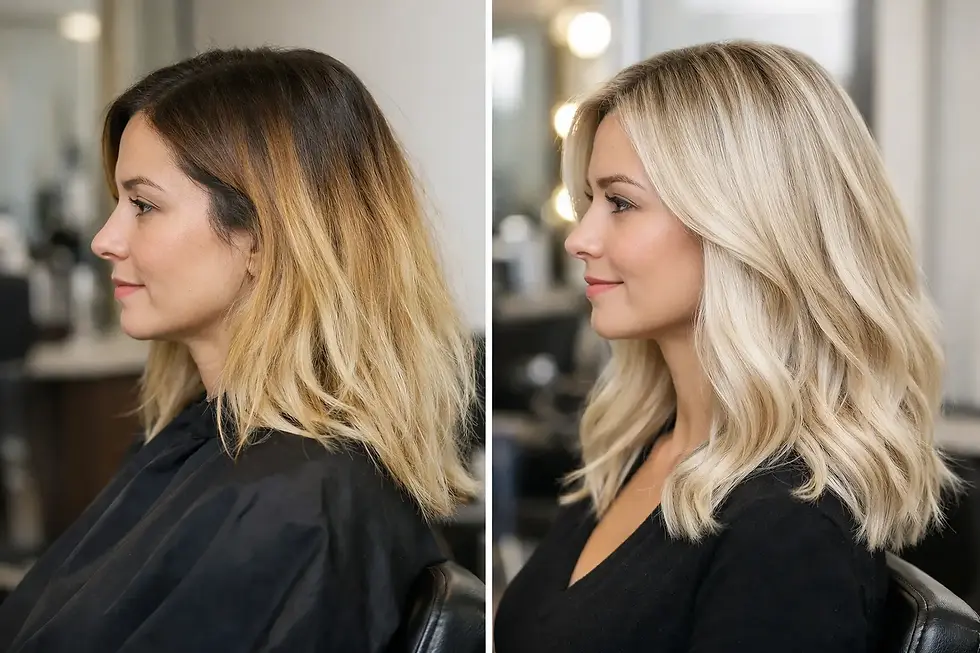
A lived-in balayage, fine lowlights or a soft root melt can be more effective. These techniques create ribbons of light and shade, making the hair look less flat while allowing for a natural grow-out. For blondes, a mix of warmer and cooler tones can prevent the colour from looking overly solid or washed out.
Grey blending is another thoughtful choice for clients who do not want a harsh regrowth line. Fine, strategic highlights can soften the contrast between natural grey and coloured hair, while preserving dimension through the lengths. The result should look refined rather than stripey.
Condition matters just as much as shade. Over-processing fine hair can lead to breakage, which reduces the density you are trying to enhance. Colour plans should be realistic, paced carefully and supported with the right bond-building and conditioning treatments where needed.
Styling Techniques That Create Lift, Not Damage
The most effective styling for thin hair usually starts before the hair is dry. Applying a lightweight volumising product at the roots can provide lift, while a heat-protection product through the lengths helps maintain condition. Avoid applying rich oils or heavy creams close to the scalp, as they can quickly weigh fine hair down.
When blow-drying, focus on lifting the roots away from the scalp rather than trying to create volume everywhere. Drying the crown in the opposite direction to where it will sit can add natural height, and a medium round brush can create a soft bend at the ends.
Loose waves can make fine hair look wider and fuller, particularly on a bob or lob. Keep the wave relaxed and avoid curling every section in the same direction. Alternating the direction slightly gives a more natural finish and prevents the hair from separating into obvious pieces.
Backcombing has its place for an occasional event, but it should be gentle and limited. Frequent aggressive teasing can cause tangling and breakage. For everyday volume, a good cut and root-focused blow-dry are kinder to the hair.
Are Tape Extensions Suitable for Thin Hair?
For clients who want more than a styling illusion, tape extensions can add carefully controlled volume and, in some cases, length. They are not automatically right for every head of fine hair. The hair must be strong enough to support them, the sections must be appropriately sized and the placement must be precise.
Well-fitted tape extensions should sit flat, blend naturally and feel comfortable. On thinner hair, the focus is often on adding fullness through the sides and ends rather than applying a large amount of hair. A lighter, tailored application can look far more believable and be easier to maintain.
If your hair is fragile from bleach, heat damage or previous extension wear, restoring its condition should come first. A healthy-hair plan may include a corrective trim, gentler colour work and professional treatments before considering extensions. There is no benefit in chasing volume if the natural hair underneath is struggling.
Haircuts to Approach With Care
There are no forbidden hairstyles, but some popular cuts need adapting for fine hair. Heavy thinning-out, razor cutting and very short layers can remove too much internal support, especially at the ends. The result may look airy immediately after styling but lack fullness in day-to-day wear.
Very long hair can also be challenging when the density is limited. This does not mean you must cut it short. It means the shape needs to be considered honestly. Bringing the length up slightly, adding a stronger baseline and using subtle colour dimension can make long fine hair look healthier and more intentional.
A dramatic short cut can be striking, too, but it requires confidence in your natural density and regular appointments to keep the silhouette sharp. A pixie with soft texture can work beautifully when cut for your face shape and hair growth, but it is not a low-commitment choice.
Choosing a Style You Can Maintain
The most flattering haircut is not always the one that looks best in a salon photograph. Consider how often you wash your hair, whether you use heated tools, how much time you have in the morning and whether you want to wear it up for work or exercise.
Bring inspiration images to your appointment, but be open to adapting them. A specialist stylist should explain what will translate well to your own hair and what needs adjusting. Small details, such as moving the parting, preserving weight at the ends or placing brighter pieces around the face, can have a bigger impact than a dramatic change.
Thin hair responds beautifully to considered work. A shape that protects density, colour that creates depth and styling that respects condition will always give a more confident result than trying to force maximum volume. If your hair has changed due to damage, hormones, stress or ageing, a personalised plan can help you move towards a style that feels fuller, healthier and easy to wear.


Comments