

Best Treatments for Damaged Hair That Work

Hair that feels rough at the ends, snaps during brushing, loses shine or refuses to hold a style is not simply ‘dry’. It is often showing signs of structural damage caused by lightening, heat, colour history, mechanical stress or a combination of all four. The best treatments for damaged hair depend on what has actually happened to it, which is why a tailored salon plan tends to give more reliable results than buying another mask at random.
For clients in Bethnal Green, Shoreditch and across East London, the first step is identifying whether the hair needs strength, moisture, smoothing, a careful colour reset, or time away from further chemical work. Healthy-looking hair is always the goal, but the route there should protect the hair you still have.
What damaged hair really needs
Hair damage is not one single issue. Bleached hair may become porous and fragile because the internal bonds have been disrupted. Hair that is regularly straightened or curled can lose moisture and develop split, brittle ends. Overprocessed dark colour, uneven home colour or repeated lifting may leave the mid-lengths weaker than the roots and ends.
This matters because moisture alone cannot repair broken internal bonds, while protein-heavy products can make already stiff hair feel harder if they are used too often. A treatment should respond to the hair’s condition, colour history, density and daily styling habits.
Some damage is treatable in the sense that hair can look, feel and behave much better. Split ends, however, cannot be fused back together permanently. A precise cut is often part of the treatment plan, not a failure of it. Removing fragile ends prevents splits travelling higher and gives the rest of the hair a fuller, cleaner finish.
Best treatments for damaged hair in the salon
Bond-building treatments for bleached or coloured hair
Bond-building services are particularly useful for hair that has been lightened, highlighted or repeatedly coloured. They work within the hair fibre to help support weakened bonds, improving strength, elasticity and manageability. Olaplex is a well-known option and can be used as part of a colour service or as a focused treatment when the hair needs a recovery appointment.
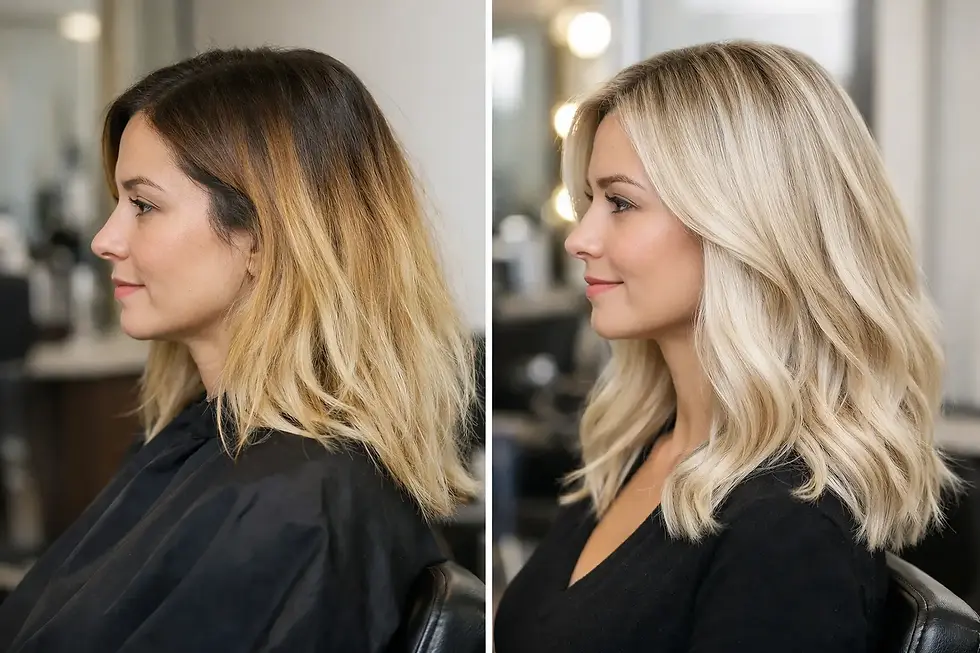
The visible difference is often less breakage, smoother brushing and a healthier finish rather than a dramatic change in texture after one visit. For balayage clients, regular bond care can help keep blonde lengths looking polished between colour appointments. It also gives your stylist more control when planning future lightening, because hair integrity is central to a safe result.
Bond care is not a licence to keep pushing damaged hair through more bleach. If the hair is stretching when wet, breaking easily or feeling overly compromised, the most responsible choice may be to pause further lightening and focus on recovery first.
Deep conditioning for dryness and rough texture
A professional conditioning treatment is ideal when hair feels dull, tangles easily or has become coarse through weather, heated styling and daily wear. These treatments replenish moisture and improve slip, making the hair easier to detangle and style without excessive pulling.
They are especially helpful for naturally dry or textured hair, as well as colour-treated hair that is otherwise in reasonable condition. The result is usually immediate softness and shine, although maintenance at home is needed to preserve it.
Conditioning treatments work best when paired with realistic changes to the routine. Turning down the heat, using a heat protectant every time and avoiding aggressive towel-drying will make a far greater difference than a single treatment used in isolation.
Keratin treatments for frizz and difficult styling
Keratin treatments are often misunderstood as a repair service. They do not reverse severe chemical damage, but they can be an excellent option for suitable hair that is frizzy, puffy, hard to manage or affected by humidity. The treatment smooths the cuticle, reduces styling time and creates a more polished finish that can last for several months with the correct aftercare.
For someone with healthy but unruly hair, keratin can make day-to-day styling much easier. For someone with very fragile, heavily bleached hair, it may not be the first choice. A consultation is essential because the right timing, formula and service plan depend on the condition of the hair and its previous chemical history.
A corrective cut and shape refresh
When damage is concentrated through the ends, a thoughtful cut can make the biggest visual difference. Removing a small amount of thin, frayed length often makes hair appear thicker, shinier and more expensive than leaving damaged ends in place for the sake of length.
This does not always mean a major change. A dusting, reshaping around the face or removing uneven breakage can restore movement while keeping as much length as possible. Regular maintenance cuts are particularly valuable for clients growing out bleached hair or recovering from a previous colour correction.
When colour correction is part of the recovery plan
Uneven colour can make damaged hair look worse than it is. Brassy bands, patchy bleach and dark colour build-up often lead clients to request more lightening immediately, but that is not always the safest route. A considered colour correction may involve toning, blending, lowlights or a softer root rather than attempting to make every section brighter in one sitting.
Grey blending and lived-in balayage can be useful choices during a recovery period because they allow a more forgiving grow-out and reduce the pressure for frequent full-head lightening. The aim is wearable colour that looks intentional while protecting the condition of the lengths.
At Sara Styles Hair, a colour plan should always be led by a close assessment of the hair, not by a one-size-fits-all formula. In some cases, the best appointment is a treatment, trim and tonal refresh first, followed by gradual colour work once the hair is stronger.
Tape extensions and damaged hair: when they can work
Tape extensions can add length, fullness and confidence, but they should only be fitted on hair that can support them. Fine hair does not automatically rule them out. The key is careful placement, suitable weight, clean sections and regular maintenance from a specialist who understands how the natural hair is behaving.
If the hair is actively breaking, severely weakened or too short in the areas where tapes would sit, recovery should come first. Extensions can conceal unevenness while hair grows, but they must never add unnecessary tension. A personal consultation makes it possible to discuss whether tapes are appropriate now, later, or not at all.
The home routine that protects salon results
The most effective treatment plan can be undone by daily habits. You do not need a crowded bathroom shelf, but you do need products and techniques that suit your hair. Use a gentle shampoo, condition thoroughly through the mid-lengths and ends, and introduce a bond-focused treatment if your stylist recommends it.
Keep heat styling measured. Always use heat protection, choose the lowest effective temperature and avoid repeatedly passing tools over the same section. Brush from the ends upwards, especially when the hair is wet or when you wear extensions, and use a microfibre towel or soft cotton T-shirt rather than rubbing hair roughly dry.
If you swim regularly, wet the hair with clean water first, tie it back where possible and rinse it promptly afterwards. Chlorine, sun exposure and hard water can all affect coloured hair, particularly blonde or porous lengths.
How to choose the right treatment plan
The best plan is usually a combination rather than one miracle service. Bleached hair may need bond care, conditioning and a trim. Frizzy but strong hair may suit keratin and a better home routine. Hair affected by a difficult colour history may need a gradual correction with low-maintenance colour choices while the condition improves.
Bring honesty to your consultation. Mention box dye, heat habits, previous extensions, recent illness or medication changes, and exactly how the hair behaves when wet. These details help your stylist make safer decisions and set clear expectations about what can be achieved in one appointment.
Damaged hair responds best to consistency, patience and skilled choices. With the right balance of treatment, careful cutting and colour work that respects the condition of your hair, it is possible to enjoy softer, stronger-looking lengths without chasing a quick fix.


Comments