

How to Restore Damaged Coloured Hair Safely

Bleached ends that feel rough, colour that fades unevenly, and hair that snaps during brushing are all signs that it is time to restore damaged coloured hair with a more considered plan. The answer is rarely one miracle treatment. Healthy-looking results come from understanding what has caused the damage, reducing further stress, and choosing the right professional services and home care for your hair.
At Sara Styles Hair, the focus is always on creating wearable colour while protecting the condition underneath it. Whether your hair has been lightened repeatedly, over-toned at home or feels fragile after a colour correction, recovery should be gradual, realistic and tailored to your hair.
Start by understanding the type of damage
Coloured hair can feel damaged for different reasons. Bleaching and high-lift colour can make the hair more porous, meaning it loses moisture more easily and may not hold tone as evenly. Heat styling, hard water, tight hairstyles and aggressive brushing can add further stress, particularly through already-lightened mid-lengths and ends.
Sometimes the issue is not severe structural damage but a build-up of products, minerals or toner that has left the hair dull, dry or flat. Other times, the hair is genuinely compromised and needs a gentler colour plan while it recovers. A professional consultation helps separate these situations, because treating every concern with more protein or more moisture can leave hair feeling worse.
Breakage is different from shedding. Finding shorter, uneven pieces around the front or crown can point to breakage, while hair coming away from the root may relate to natural shedding, stress, hormones or scalp health. If you are concerned about sudden or substantial hair loss, it is sensible to speak with a medical professional as well as your stylist.
Pause the cycle of over-processing
The quickest way to make damaged hair harder to manage is to keep chasing an immediate colour result. If your blondes have become too warm, your first instinct may be to bleach again. If your brunette colour looks flat, you may be tempted to refresh the whole head. But additional processing on fragile hair can create uneven lift, increased breakage and a result that is harder to correct later.
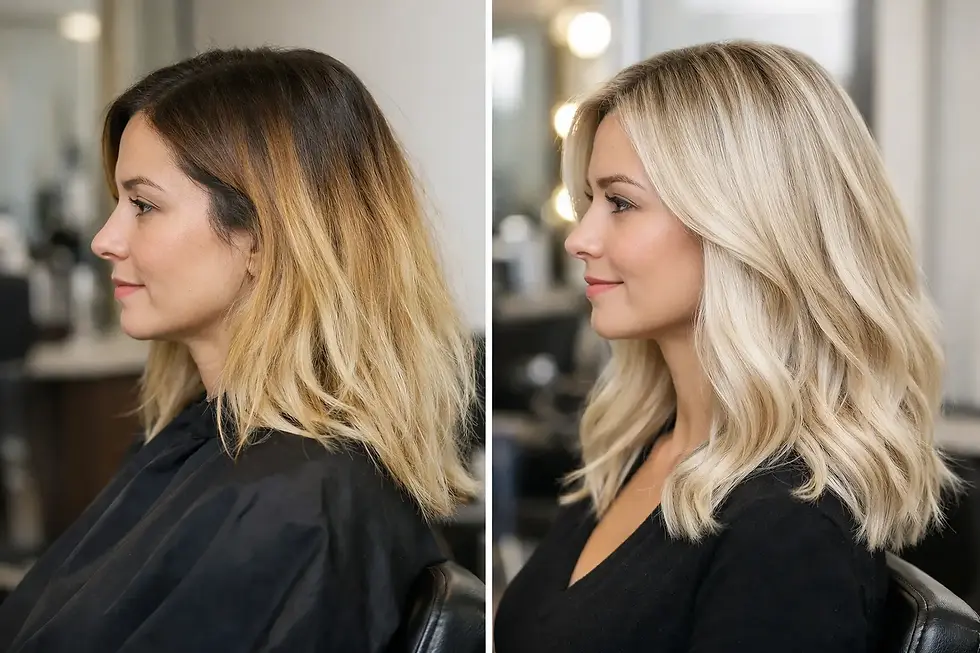
A better approach may be to soften regrowth, blend existing colour and use a gloss or toner to improve shine and tone without unnecessary lightening. For blonde clients, fine highlights or a carefully placed balayage can maintain brightness while allowing some previously lightened hair to rest. For darker shades, a dimensional colour refresh can bring back depth without repeatedly colouring the most porous ends.
This does not mean you must abandon the colour you love. It means adjusting the route to it. A good colour plan balances the desired result with what your hair can comfortably tolerate at that appointment.
Use treatments with a clear purpose
To restore damaged coloured hair, treatments need to suit the condition of the hair rather than follow a trend. Bond-building treatments such as Olaplex can be particularly useful when hair has been lightened or chemically stressed. They support the hair through and after colour services, helping it feel stronger and more manageable as part of a wider routine.
Moisture treatments have a different role. They help dry, porous hair feel softer, smoother and easier to detangle. Protein-based care can be useful when hair feels overly elastic or weak, but too much protein may make certain hair types feel stiff. This is why a treatment plan should be based on how your hair behaves, not simply on the label of the product.
A keratin treatment can be an excellent option for someone whose coloured hair is healthy enough for the service but difficult to control because of frizz, humidity or daily heat styling. It can reduce styling time and leave hair looking polished. However, it is a smoothing service, not a repair treatment for severely compromised hair. If the hair is fragile, restoring strength and moisture comes first.
Change the way you wash and style at home
Salon work creates the foundation, but home care protects it between appointments. Wash coloured hair with lukewarm rather than very hot water, as high temperatures can leave dry lengths feeling even more stripped. Use a colour-safe shampoo suited to your scalp and follow with conditioner through the mid-lengths and ends.
You do not need to wash less at all costs if your scalp becomes oily quickly. A healthy scalp matters. Instead, focus on gentle cleansing and avoid scrubbing the lengths into a tangled pile. Work shampoo into the scalp, allow the suds to run through the hair, then condition carefully.
After washing, press excess water away with a soft towel or cotton T-shirt rather than rubbing vigorously. Apply a leave-in conditioner or heat protection before blow-drying, and keep hot tools at the lowest effective temperature. If you regularly straighten or curl your hair, reducing the frequency by even one or two days a week can make a visible difference over time.
Brushing also deserves more attention than it gets. Start at the ends, work upwards gradually, and use a gentle brush or wide-tooth comb on damp hair. Never force through knots, especially around previously lightened sections where the hair is most vulnerable.
Consider a haircut part of the repair plan
No mask can permanently fuse together split ends. Trimming the most compromised ends often makes hair look healthier immediately, even if the change is small. A careful cut can remove the sections that keep tangling and breaking, giving the rest of the hair a better chance to retain length.
This does not have to mean a dramatic chop. For many clients, regular micro-trims alongside a gradual colour plan are enough to improve the look and feel of the hair over several appointments. If the ends are very thin, however, a more meaningful reshape may create a fuller, more polished result than trying to preserve every last centimetre.
Be careful with extensions on fragile hair
Tape extensions can add beautiful length and density when professionally matched, fitted and maintained. They can also be a useful confidence boost while you grow out a shorter cut or recover from a difficult colour experience. But they should only be considered once the natural hair is strong enough to support them and the scalp is healthy.
For damaged coloured hair, the priority is a detailed assessment of density, breakage patterns and daily lifestyle. Extensions that are too heavy, too long or poorly placed can put tension on weakened hair. A specialist approach means choosing a safe amount of hair, blending it naturally and giving clear aftercare so the result looks effortless without compromising your own lengths.
Know when colour correction needs patience
Colour correction is often where hair needs the most care. Home dye, uneven bleaching, banding and unwanted tones can all require a series of appointments rather than one long session. Trying to remove every trace of darkness or brassiness in a single visit may not be the safest option for the condition of the hair.
A staged correction can include removing unwanted build-up where appropriate, refining the tone, adding depth back into overly light sections and creating a more blended finish. The result may not be the final colour goal on day one, but it can be a far better starting point for healthy, long-lasting colour.
At a consultation, be open about your full colour history, including box dye, henna, bleach baths and previous smoothing treatments. This information helps your stylist make safe decisions and set expectations clearly.
Give recovery enough time to show
Hair recovery is not always dramatic after one appointment. You may notice better softness, shine and manageability first, then less breakage over the following weeks as your routine becomes more consistent. The newest growth will benefit most from the changes you make now, while older, heavily processed ends may still need gradual trimming.
For clients in Bethnal Green and across East London, a personalised plan can combine carefully placed colour, strengthening treatments, a shape that supports fuller-looking ends and realistic maintenance appointments. The aim is never to make your hair look artificially perfect for one day. It is to help it feel and look healthier each time you return.
Damaged coloured hair does not need to mean giving up on beautiful colour. With the right pace, professional judgement and kinder daily habits, it can become softer, stronger and far easier to wear with confidence.


Comments