

Can Balayage Hide Grey Roots? What to Expect

A sharp line of grey regrowth can make even a beautiful colour feel high maintenance. So, can balayage hide grey roots? Yes, when it is planned as grey blending rather than simply adding lighter pieces. The aim is not to make every grey hair disappear. It is to break up the contrast at the root, so new growth looks softer, more diffused and far less obvious as it comes through.
For clients who want natural-looking colour without a frequent root tint, balayage can be one of the most flattering approaches. The right placement, tone and depth make all the difference.
How balayage hides grey roots
Traditional balayage is hand-painted through the mid-lengths and ends to create a sun-kissed, graduated effect. For grey roots, the technique needs to work closer to the scalp in selected areas, particularly around the hairline, parting and crown where greys tend to show first.
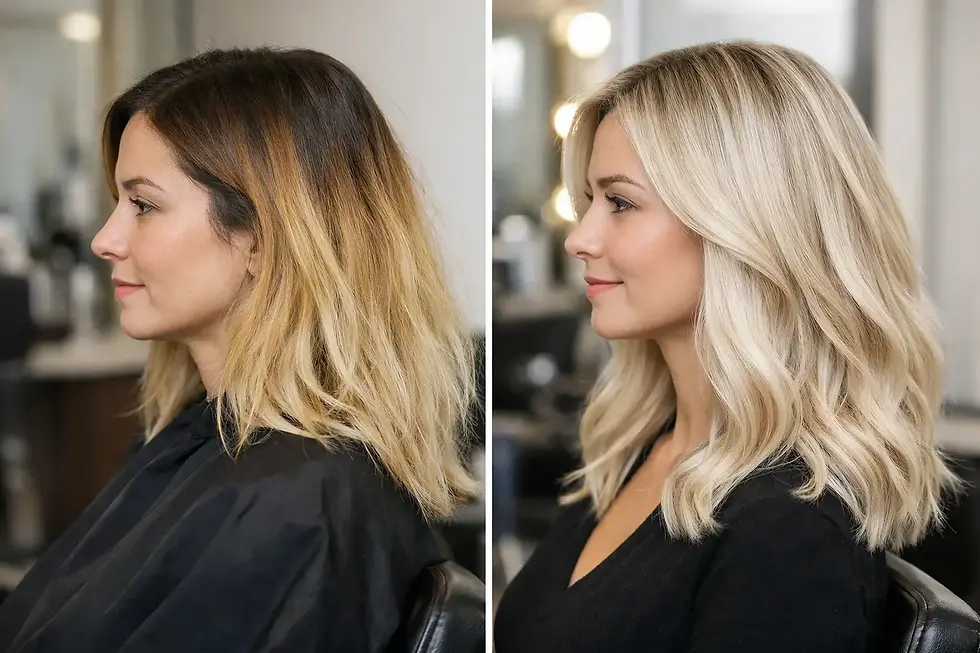
Fine, softly woven highlights are blended into your natural base colour and existing grey. This reduces the solid line between your root and previously coloured hair. Instead of regrowth looking like a block of silver against a darker shade, the grey becomes part of a lighter, more dimensional pattern.
A root melt or subtle shadow root can also be used where appropriate. This adds a carefully chosen deeper tone at the root area, then blends it into the balayage. It gives the colour a more expensive, lived-in finish and helps the grow-out look intentional.
The key is contrast. Grey hair is most noticeable when it sits beside a very dark, flat colour. By introducing fine ribbons of light and a softer transition, there is less contrast for the eye to pick out.
Balayage is grey blending, not always grey coverage
This distinction matters. If you want every grey hair fully covered from root to tip, a permanent root colour is usually the more reliable choice. Balayage alone does not blanket-cover the root in the same way a tint does.
Grey blending is ideal if you are happy for some grey to remain visible, provided it looks refined and intentional. It is particularly effective for clients with scattered grey hair or a naturally lighter base, where silver strands can blend beautifully with beige, honey, ash or creamy tones.
If you have a high percentage of white or grey around the front hairline, balayage may still work well, but it may be combined with a root tint, demi-permanent gloss or carefully placed lowlights. This creates a bespoke result rather than forcing one technique to solve every concern.
At Sara Styles Hair, consultations focus on how your grey grows in, not just how it looks on the day. That includes the density of grey, your natural base, previous colour history and how often you realistically want to maintain it.
Who is balayage for grey roots best suited to?
Balayage is a strong option for clients who have begun seeing grey through their parting or temples and do not want the commitment of colouring their roots every four to six weeks. It can be especially useful if you have previously had an all-over dark tint and are ready to move towards a softer, lower-maintenance colour.
It also suits clients who want a more natural transition into grey over time. Rather than repeatedly covering every silver strand, fine highlights and lowlights can make the change feel gradual. The result still looks polished, but there is less pressure to chase a perfect solid root colour.
Your hair condition is part of the decision too. Lightening can be safe and beautiful when carried out with the right formulation, placement and aftercare, but previously lightened, dry or fragile hair may need a more cautious plan. In some cases, adding lowlights and a gloss first is kinder to the hair than trying to create a very light balayage in one appointment.
Choosing the right tone for your grey blending
The most wearable grey-blending balayage is rarely one-dimensional blonde. The best tones work with your skin tone, natural base and the character of your grey hair.
Warm brunette bases often look beautiful with soft caramel, biscuit or honey ribbons. These shades brighten the face without creating an overly blonde result. Cooler brunette hair may suit mushroom brown, taupe or ash-beige tones, especially where the natural grey is silvery.
For naturally blonde or light brown hair, a mix of bright and muted blonde pieces can make grey almost disappear into the overall colour. Pearl, beige and creamy tones often soften white strands without leaving the hair flat or overly icy.
Very ash colours are not automatically the answer. On some hair, too much cool pigment can look dull or grab unevenly on porous ends. A personalised toner is what brings the balayage together, balancing warmth where needed while keeping the finish natural.
Placement matters more than brightness
A common mistake is assuming that more blonde means better grey coverage. In reality, overly bright or chunky highlights can increase contrast, create stripes and make the roots look more obvious as they grow.
Fine placement around the face and through the parting usually delivers the biggest visual difference. These are the areas you see in the mirror and others notice first. The hairline can be brightened with delicate pieces, but the application should remain soft enough to avoid a harsh band at the scalp.
Dimension through the lengths is just as important. A mixture of lighter and deeper tones gives the eye somewhere to travel, making individual greys less noticeable. It also helps the colour look more natural when worn straight, waved or tied back.
How long will balayage hide grey roots?
Most clients find that grey-blending balayage grows out more softly than a full root tint. Depending on your starting colour and the amount of grey, you may be able to go 10 to 16 weeks between larger balayage appointments.
That does not mean there is no maintenance at all. A toner or gloss appointment between balayage sessions can refresh shine, adjust unwanted warmth and keep the overall tone looking considered. If your grey is concentrated at the front, a light root blend or face-framing refresh may also help you stretch the time between full colour appointments.
How quickly you notice regrowth depends on your natural depth and how your hair is styled. A centre part usually exposes roots more than a softer side part, while textured waves can make a blended root look even more forgiving.
Looking after balayage between appointments
Good home care protects both the tone and condition of your colour. Use a colour-safe shampoo and conditioner, avoid excessive heat where possible and always apply heat protection before styling. If your hair feels dry after lightening, a bond-building or moisture treatment can help maintain softness and reduce breakage.
Purple shampoo can be useful for some blondes, but it is not a daily essential. Overuse can leave pale, porous hair looking dull or slightly violet. A stylist can advise whether it suits your particular toner and how often to use it.
If your grey is showing more than you would like before your next visit, changing your parting, adding soft movement or wearing the hair with a little root lift can make a noticeable difference. These are simple styling choices, but they help preserve the relaxed effect that makes balayage so appealing.
When a different service may be better
Balayage is not the right answer for everyone. If you prefer a rich, uniform brunette or you want your greys completely hidden at all times, a regular root tint may give you the result you want with less compromise. It can still be paired with balayage through the lengths for brightness and depth.
If your hair has been coloured very dark, box dyed or is uneven from previous salon work, a colour correction plan may be needed before a soft grey blend is achievable. This is where realistic expectations matter. Protecting the condition of your hair is always more valuable than pushing for a result too quickly.
A well-designed balayage should make your colour feel easier to wear, not leave you worrying about every new silver hair. For grey roots, the most flattering result is usually soft, dimensional and tailored to your natural pattern of regrowth.
See Real Results
Explore real client results from Sara Styles Hair in East London.
Book Your Appointment
Book your appointment at Sara Styles Hair in Bethnal Green, East London.


Comments