

How Balayage Grows Out Between Appointments

Updated: Sep 22
A balayage appointment should not leave you watching the calendar for an obvious regrowth line. The reason many clients choose this technique is precisely how balayage grows out: softly, with depth retained at the root and lighter pieces appearing to melt through the mid-lengths and ends. Done well, it can look intentional for months rather than weeks.
That said, low maintenance does not mean no maintenance. Your natural base colour, how light you go, your previous colour history and the finish you prefer will all affect when you want to return to the chair.
Why balayage grows out more softly
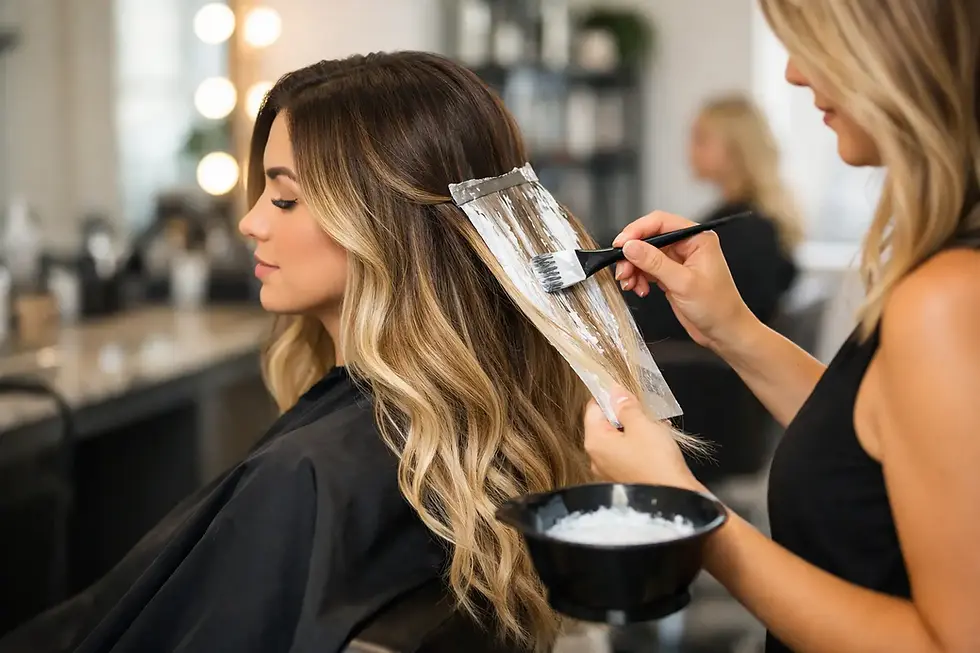
Traditional foil highlights often begin close to the scalp in a regular pattern. As hair grows, the contrast between the natural root and highlighted hair can create a more defined line. Balayage is painted with a deliberately softer starting point, usually leaving some natural depth around the root and placing brightness where it will be most flattering.
Rather than one solid block of lightness, a considered balayage has a blend of finer and brighter ribbons. This makes the transition from your natural colour into the lightened lengths much less abrupt. As your hair grows, the root simply becomes a little deeper and longer, rather than looking like a colour appointment has been missed.
The effect is especially useful if you like natural-looking, wearable colour but have a busy diary. It also gives more flexibility between major lightening appointments, provided the original placement has been tailored to your hair and lifestyle.
How balayage grows out on different hair colours
The contrast between your own hair colour and the balayage is the biggest factor. A soft caramel balayage on a brunette base will generally grow out very discreetly. A cool, pale blonde balayage over a dark natural base can still look beautifully blended, but the change at the root will become more noticeable sooner.
Brunette and dark blonde bases
For brunettes, balayage can add dimension without removing the richness that makes darker hair look glossy. A lived-in brunette balayage often develops very naturally because the root area remains close to the client’s own shade. With the right gloss appointments, it can continue to look expensive and multi-dimensional as it grows.
Dark blondes usually have the widest choice of maintenance levels. Fine, softly lifted pieces can be refreshed infrequently, while a brighter, more blonde finish may need toning and face-frame work sooner to keep it looking fresh.
Blonde balayage
Blonde balayage tends to need more attention to tone than to regrowth. Lightened hair can become warm, dull or slightly yellow over time, particularly with hard water, heat styling and holidays. The blend at the root may still look soft, but the overall result can lose its clean, polished finish without a toner or gloss.
If you prefer a very bright blonde around the hairline, those front pieces are often the first area you notice as they grow out. A partial refresh can bring light back around the face without committing to a full balayage appointment.
Grey hair and balayage
Balayage can be a useful part of a grey-blending plan, although it is not the same as full grey coverage. Fine lighter pieces can soften the contrast between silver strands and a darker base, helping new growth look less stark. For clients who want to embrace their greys gradually, this can feel more natural than a solid root colour.
If full coverage is your priority, balayage may be combined with a root colour or a demi-permanent gloss. The right approach depends on how much grey you have, where it sits and whether you want a blended or more covered finish.
What changes first as your colour grows out
Most clients do not notice the root first. They notice that the tone has shifted. Lightened ends can become warmer, particularly on naturally dark hair, while very cool blondes can look flatter once the original toner fades.
Next, the brightness around the face can lose impact. Face-framing balayage is designed to bring light and softness to the complexion, so even a small amount of natural regrowth can make the colour feel less fresh in this area. This does not necessarily mean you need a full colour appointment.
Finally, the overall placement can start to feel too low. This is often the point where the lightest parts of the balayage sit further down the hair than you would like. A stylist can assess whether a few carefully placed highlights and a root melt will restore the shape, or whether it is time for a more complete refresh.
When to book a balayage refresh
There is no fixed rule, but many clients book a full balayage refresh around every 12 to 16 weeks. Some go longer, especially with a lower-contrast result and healthy hair. Others prefer to return sooner because they enjoy a brighter, more visibly blonde finish.
A gloss or toner appointment is often worthwhile between major colour sessions, usually around six to eight weeks after lightening. This can neutralise unwanted warmth, add shine and refine the shade without putting your hair through another full lightening service.
A partial refresh may be the right middle ground if your face frame and parting need attention but your lengths are still in good condition. This is a more targeted way to maintain the look while protecting the integrity of previously lightened hair.
At Sara Styles Hair in Bethnal Green, the aim is not to lighten hair repeatedly for the sake of it. A good maintenance plan should keep your colour looking considered while respecting the condition of your hair.
Keeping grown-out balayage looking polished
Home care makes a visible difference to the way balayage ages. Colour-safe shampoo and conditioner help slow fading, while a weekly treatment supports lightened ends that may be more porous. If your blonde tends to turn warm, a purple or blue-toned shampoo can help, but it should be used with care. Overuse can leave porous hair looking dull or slightly violet.
Heat protection matters just as much as the shampoo you use. Frequent straightening, curling and very hot blow-dries can fade a toner and make the ends feel dry, which makes balayage look less reflective. Lower heat settings and a proper heat protectant will help the colour retain its finish.
If your hair feels dry after lightening, do not assume that another toner is the answer. Toners adjust shade, but they do not repair breakage or restore moisture on their own. A conditioning plan, regular trims and bond-building treatments such as Olaplex can help maintain strength between colour appointments.
The difference between lived-in and neglected colour
Lived-in balayage has intention behind it. The root is soft, the tone suits the base colour, and the ends still look healthy enough to reflect light. Neglected colour tends to look brassy, uneven or overly dry, with a face frame that has lost its shape.
The distinction is not about visiting the salon constantly. It is about booking the right service at the right time. A simple gloss can sometimes make a three-month-old balayage look newly finished, while an unnecessary full lightening appointment may add stress to hair that only needed tone and care.
It is also worth being honest about what you want from your colour. If you love a bright, creamy blonde from root to ends, balayage may be lower maintenance than traditional highlights, but it will not be completely maintenance-free. If you are happy with softness, depth and a little variation, you can usually leave much more time between lightening appointments.
A colour plan that works with your hair
The best balayage grows out well because it is designed for the person wearing it, not copied from a photograph without considering their base colour, haircut or hair condition. Fine hair may need a lighter touch to keep the ends looking full, while very thick hair can carry more dimension. Previously coloured hair may need a gradual approach to achieve brightness safely.
A consultation gives you space to decide how bright you want to be now, how often you realistically want to maintain it and what your hair can comfortably tolerate. The most flattering result is rarely the palest possible blonde. It is the colour that still looks healthy, blended and like you several weeks after your appointment.
When your balayage continues to look soft as it grows, maintenance becomes less about correcting a problem and more about choosing the moment you would like your colour to feel freshly polished again.
See Real Results
Explore recent client transformations from Sara Styles Hair: View on Instagram
Book Your Consultation
Book your consultation with Sara Styles Hair: Book Now

Comments