

How Grey Blending Works for Softer Regrowth

Grey hair rarely appears all at once. It often begins around the hairline, parting or temples, then becomes more noticeable against a darker base colour. Understanding how grey blending works can make the decision feel far less daunting: rather than trying to cover every silver strand with one solid shade, the colour is designed to work with your natural regrowth for a softer, more dimensional result.
For clients who want polished colour without a hard line at the roots, it is a considered middle ground between full grey coverage and simply growing out natural grey. The finish can be subtle, bright, lived-in or more defined, but it should always suit your skin tone, natural depth and maintenance preference.
What Grey Blending Actually Means
Grey blending is a personalised colouring approach that mixes grey strands into the overall colour pattern of the hair. Depending on your starting point and the result you want, this may involve fine highlights, lowlights, a root melt, glossing or gentle tonal work through the mid-lengths and ends.
The aim is not usually to make grey disappear completely. Instead, lighter and darker pieces are placed around it so the contrast is reduced. Grey then reads as part of the colour, rather than as an obvious band of regrowth against a single, flat shade.
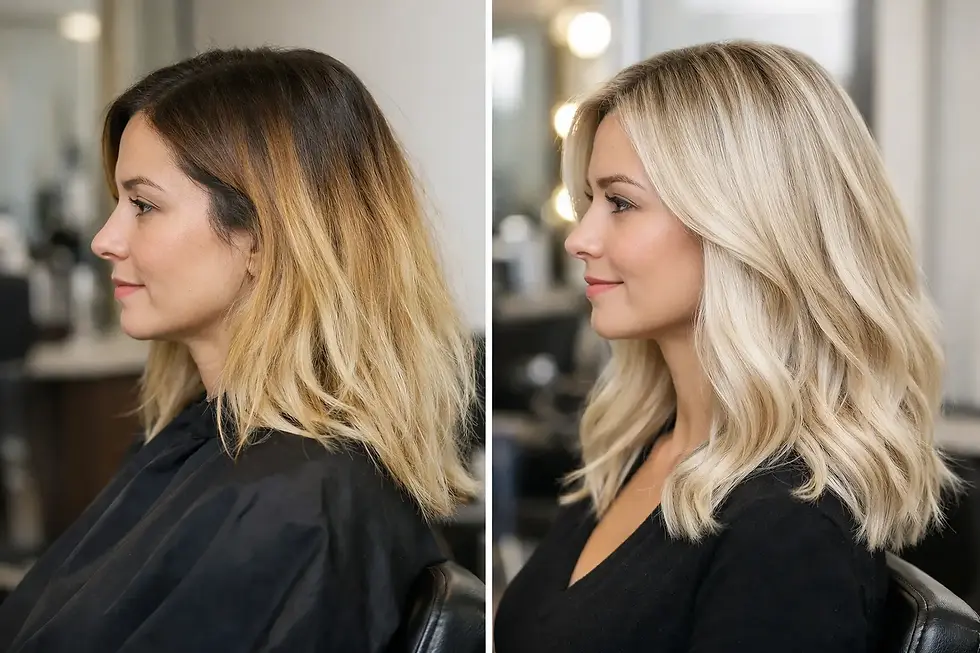
This is why two grey-blending appointments can look completely different. On naturally brunette hair, soft caramel, beige or cool-toned highlights can break up a silver root line, with lowlights adding depth where needed. On naturally lighter hair, the focus may be on refining brassiness, adding a few brighter ribbons and toning the grey so everything sits together.
How Grey Blending Works in the Salon
A successful result begins with assessing the grey itself. Some clients have a fine scattering of silver through the hairline, while others have a stronger white concentration through the parting and front. Hair that is 20 per cent grey needs a different approach from hair that is 70 per cent grey, particularly if the remaining natural hair is very dark.
Your previous colour history matters just as much. Permanent box dye, old highlights, colour correction work and porous ends all affect how the hair will lift and hold tone. A specialist consultation makes it possible to set a realistic plan, especially where the priority is keeping the hair looking healthy as it becomes lighter.
Fine highlights are often used to mimic the variation already present in greying hair. They can be woven through the parting, hairline and crown, where regrowth is usually most visible. Rather than creating bold stripes, the sections are selected to soften the transition from root to lengths.
Lowlights may then be added if the hair has become too light, too flat or overly warm. These deeper pieces give the colour structure, helping silver strands sit alongside tones that look intentional. A gloss or toner at the end of the appointment refines the final shade, adding shine and helping blonde, brunette and grey tones look more cohesive.
In some cases, a soft root shadow is helpful. This does not mean covering the root with a block colour. It is a carefully diffused tone that reduces the contrast at the scalp and gives highlights a more natural starting point. It can be especially useful for clients transitioning away from regular full-head tinting.
Why It Grows Out More Softly
Traditional root coverage creates an even, opaque colour at the scalp. It can look beautiful, but as the natural grey comes through, the difference between the coloured hair and new growth is clearer. If you are used to colouring every four to six weeks, that regrowth line can quickly become the deciding factor in your appointment schedule.
With grey blending, the root area already contains a mix of tones. As fresh grey appears, it joins a more varied pattern rather than sitting against a solid block of colour. You will still see regrowth, particularly if your natural hair is dark, but it tends to look softer and less urgent.
That does not mean grey blending is maintenance-free. Toners fade, highlights can become warm and a cut or treatment is still needed to keep the overall finish fresh. The difference is that many clients can choose a less frequent colour routine, with gloss appointments between bigger sessions if they want to maintain shine and tone.
Is Grey Blending Right for You?
Grey blending suits clients who are ready for a lower-contrast colour routine but still want their hair to look polished and professionally maintained. It is particularly effective if you have started to notice grey around the front, want to move away from a solid all-over tint, or like the movement and brightness of balayage but need more focus at the root.
It can also be a good option after years of dark colour. Moving directly from permanent brunette coverage to bright blonde can put unnecessary pressure on the condition of the hair. A gradual blend allows the colour to evolve over several appointments, protecting the integrity of the lengths while reducing the visual contrast of grey.
The best candidates are open to some visibility of their natural grey. If your goal is total, opaque coverage from root to tip, a permanent tint may be the more suitable service. There is no right or wrong choice. It depends on whether you value complete coverage, softer grow-out, brightness, or a balance of all three.
Choosing the Right Tone for Your Grey
Grey hair can pull cool, white, silver or slightly yellow depending on its texture, porosity and surrounding natural colour. The right tone is not simply about choosing ash over warm. Very cool highlights on a warm brunette base can look disconnected, while too much warmth can make silver strands appear dull or brassy.
A tailored blend considers your complexion, eye colour and the tones that already suit your wardrobe and make-up. Soft beige blondes, creamy ribbons, mushroom browns, neutral brunettes and cool champagne tones can all work beautifully. The most wearable colour generally has a little dimension, rather than one uniform tone throughout.
Condition also affects the shade. Lightened, dry ends absorb toner differently from healthy new growth, which is why careful sectioning and product choice matter. Treatments such as Olaplex can be incorporated where appropriate to support the hair during a lightening service, but they do not replace a realistic approach to how light the hair can safely go in one appointment.
Looking After Grey-Blended Hair at Home
Your home care should support both tone and condition. Use a professional shampoo and conditioner suited to coloured hair, and avoid very hot water where possible, as it can fade a gloss more quickly. Heat protection is essential if you regularly blow-dry, straighten or curl your hair.
Purple shampoo can be useful for some blondes and silver tones, but it is not an everyday product for everyone. Used too often, it can make porous sections look dull or leave an uneven violet cast. A stylist can advise whether it suits your individual blend and how often to use it.
If the hair feels dry after lightening, prioritise moisture and bond-supporting care over adding more pigment. Healthy, reflective hair makes blended colour look more expensive and natural. Regular trims also prevent fine, lightened ends from making the overall finish appear tired.
What to Expect From Your First Appointment
A first grey-blending appointment is about building the right foundation, not forcing an instant transformation. Bring a clear idea of how much grey you are comfortable seeing, how often you realistically want to visit the salon and whether you prefer warm, neutral or cooler tones. Photos can be helpful, but your own hair history will always guide what is achievable.
At Sara Styles Hair, colour is planned around the individual rather than copied from a formula. For clients in Bethnal Green, Shoreditch and wider East London, that means a one-to-one approach that takes account of your natural pattern, existing colour and how you want your hair to grow out between visits.
The most flattering grey blend should make your regrowth feel less like something to hide and more like a natural part of a colour that still feels like you.


Comments