

Grey Blending vs Root Colour - Which Is Best?

A few visible greys at the parting can change how you feel about your colour long before they change your overall look. When deciding between grey blending vs root colour, the right choice is not simply about covering grey. It is about how you want your hair to grow out, how often you are happy to maintain it and whether you prefer a softer or more polished finish.
At Sara Styles Hair in Bethnal Green, the consultation starts with your natural base, percentage of grey, previous colour and the condition of your hair. Both services can look beautiful, but they create very different maintenance routines.
What is root colour?
A root colour is a traditional grey-coverage service. Permanent or demi-permanent colour is applied directly through the regrowth to cover or soften grey hair and bring the roots back in line with the rest of your colour.
For clients who like a rich brunette, clean blonde, copper or darker all-over shade, root colour creates a neat, consistent result. It is particularly effective when grey is concentrated around the hairline, temples and parting, where even a small amount of regrowth can feel noticeable.
The main appeal is coverage. If your goal is to see as little grey as possible between appointments, root colour is usually the more reliable option. It can also refresh faded tones and make the whole look feel more polished when paired with a gloss or toner through the lengths.
Who root colour tends to suit
Root colour often suits clients with a higher percentage of grey who want a more uniform finish. It is also a strong choice if you enjoy your natural shade but want to maintain it without greys showing through.
The trade-off is the regrowth line. As your hair grows, the contrast between the coloured root and new grey hair can become visible, particularly with darker shades. Most clients book every four to six weeks, depending on their grey pattern, hair growth and preferred level of coverage.
What is grey blending?
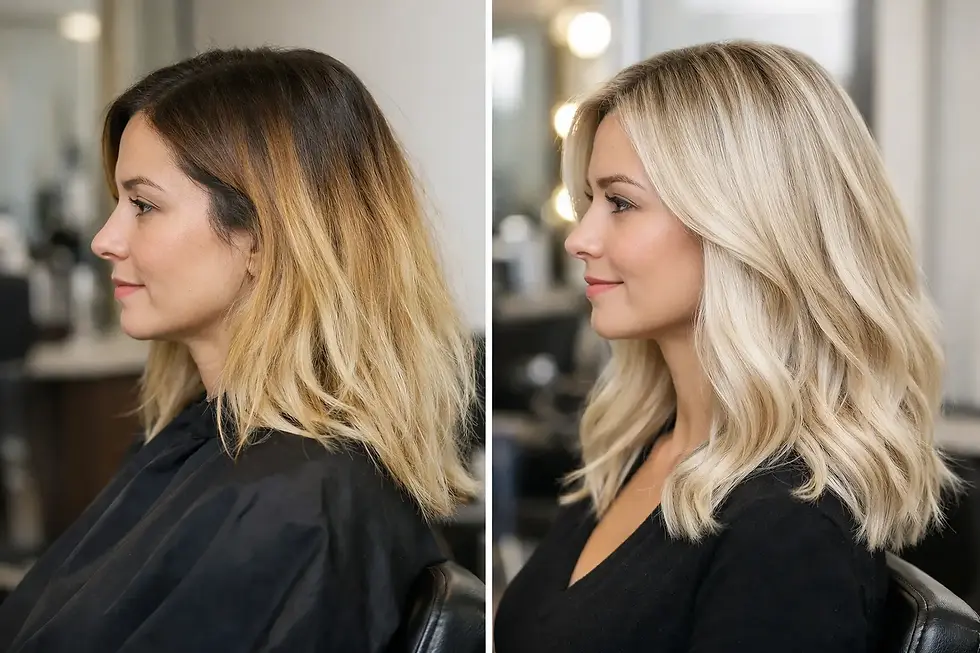
Grey blending uses carefully placed highlights, lowlights and tonal glossing to soften the contrast between grey hair and your coloured hair. Instead of trying to cover every grey strand, it works with the natural grey pattern so it becomes part of a dimensional, lighter-looking result.
The technique can be very subtle. Fine highlights around the hairline and parting help diffuse bright grey strands, while lowlights can add depth where hair has become too light or washed out. A gloss is then used to refine the tone and add shine without creating an obvious block of colour at the root.
Grey blending is especially popular with clients who want a more relaxed grow-out. Rather than a solid root line appearing after a few weeks, the colour evolves softly because the grey is integrated into the overall placement.
Why the placement matters
Good grey blending is not simply adding highlights everywhere. It needs to be tailored to where your grey appears, the density of your hair and the shade you want to see when you look in the mirror.
For example, a client with bright silver strands around the front may benefit from delicate face-framing brightness and finely woven highlights through the parting. Someone with salt-and-pepper regrowth through darker hair may need lowlights as well, so the finished colour has depth rather than looking overly blonde.
This is why a personalised approach matters. The aim is a natural-looking colour that still feels like you, not a one-size-fits-all transformation.
Grey blending vs root colour: the key differences
The biggest difference is not the product used. It is the finish you want and the maintenance you are prepared to keep up with.
Root colour is designed to conceal grey more completely. It gives a stronger, more even result at the scalp and works well for clients who want their grey covered from appointment to appointment. The regrowth is generally more defined, so regular bookings are part of the plan.
Grey blending is designed to reduce contrast. It allows some grey to remain visible, but makes it look intentional and flattering within the colour. Appointments can often be spaced further apart, although toners and glosses may still be useful between bigger colour services to keep the result fresh.
Neither is automatically better. If seeing grey at all bothers you, blending may feel too subtle. If you are tired of a sharp root line every month, full coverage may feel like more upkeep than you want. The best decision is usually based on your lifestyle as much as your hair colour.
How often will you need maintenance?
A root colour appointment is commonly needed every four to six weeks for clients who want consistent coverage. If the colour is darker than your natural grey, a regular schedule helps avoid a noticeable band of regrowth.
Grey blending can often be refreshed every eight to 12 weeks, with some clients going longer depending on the placement and their natural base. A toner, gloss or treatment appointment between colour visits can keep the tone refined and the hair looking healthy without committing to another full highlight service.
It is worth being realistic here. Grey blending is lower maintenance, not no maintenance. Lightened hair can need thoughtful care, and warmth can appear over time. Root colour can be quicker to maintain, but requires more frequent visits. The right routine should feel manageable rather than something you are constantly trying to keep up with.
Can you move from root colour to grey blending?
Yes, but it is usually a gradual process. If you have been colouring your roots dark for years, moving straight to a fully blended result may leave warmth or uneven bands through the hair. A careful transition protects the condition of your lengths and gives a more believable finish.
The first appointment may involve fine highlights to break up old colour, lowlights to balance the tone and a root melt or gloss to soften the line. Future appointments build on that work until the colour has more dimension and the grey sits naturally within it.
For some clients, a partial blend around the hairline is the ideal first step. It can soften the most visible greys while retaining root coverage elsewhere. This is a useful option when you are unsure whether you are ready to let more grey show through.
Hair condition should guide the plan
If your hair is dry, fragile or has a history of home colour, previous bleaching or colour correction, the technical plan needs to prioritise condition. Grey blending may involve lightening, while root colour can involve repeated colour application to the same areas if not applied with care.
A specialist colour appointment should consider what is already on the hair, not just the shade you would like next. Bond-building treatments such as Olaplex, suitable toning and a realistic appointment schedule can help preserve softness and shine while your colour changes.
At home, use professional shampoo and conditioner chosen for your hair type, limit excessive heat styling and use heat protection every time. Healthy hair reflects light better, which makes any grey-blended or root-colour result look more expensive and polished.
Questions to ask before choosing
Think about what you notice most between appointments. Is it the bright grey at your temples, the dark root line, faded lengths or an overall lack of brightness? Your answer gives a clearer direction than choosing a service name alone.
It also helps to consider whether you want to look fully coloured or naturally dimensional. Bring photos of colour you genuinely like, but be open about how often you want to visit and what your hair has been through previously. A colour plan should be wearable in real life, not just on the day you leave the chair.
For many women in East London, the best result is a tailored middle ground: strategic grey blending for softness, paired with subtle root coverage where greys are most visible. The aim is hair that grows out beautifully, feels healthy and gives you confidence each time you catch your reflection.
See Real Results
Explore real client results from Sara Styles Hair in East London on Instagram.
Book Your Appointment
Book your appointment at Sara Styles Hair in Bethnal Green, East London through the online booking service.


Comments