

Colour Correction After Home Hair Dye
- Sara

- Jul 8
- 5 min read
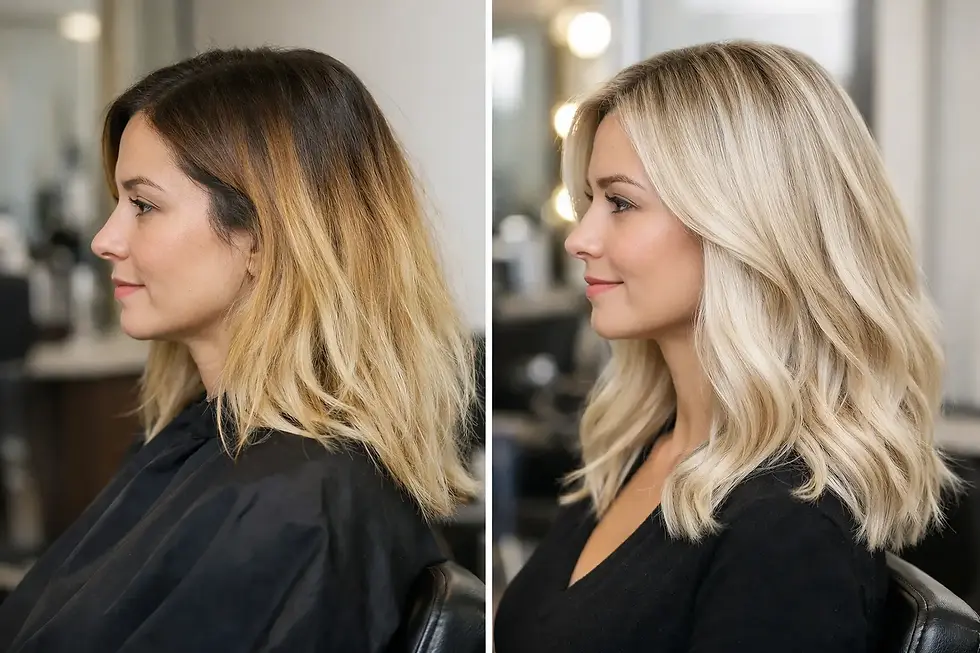
The box said ash blonde. The mirror says warm bands, dark ends, and roots that somehow look brighter than the rest. That is usually the point when colour correction after home hair dye stops feeling like a quick fix and starts needing a proper plan.
At this stage, the goal is not to throw more colour on top and hope for the best. Good correction is about understanding what is sitting on the hair now, how compromised the condition is, and what can be changed safely in one appointment. For many clients, especially those balancing work, social plans and regular maintenance, a calm, realistic approach gets the best result.
Why home dye goes wrong so easily
Home colour often looks simple because the instructions are simple. Hair history is not. Most at-home colour problems come from uneven porosity, old tint left through the ends, overlapping bleach, or choosing a shade based on the picture on the box rather than the starting level of the hair.
Even when the colour itself is not extreme, the finish can still look off. Roots may pull warmer because of scalp heat. Mid-lengths can turn flat or muddy where previous dye has built up. Ends often grab too dark or too dull because they are drier and more porous.
This is why colour correction is rarely just about changing the shade name. It is about correcting depth, tone, balance and condition together.
What colour correction after home hair dye usually involves
Colour correction after home hair dye can be very straightforward, or it can be a staged process. It depends on what has been used, how many times the hair has been coloured, and whether lightener, box dye, toner or semi-permanent products have all been layered over time.
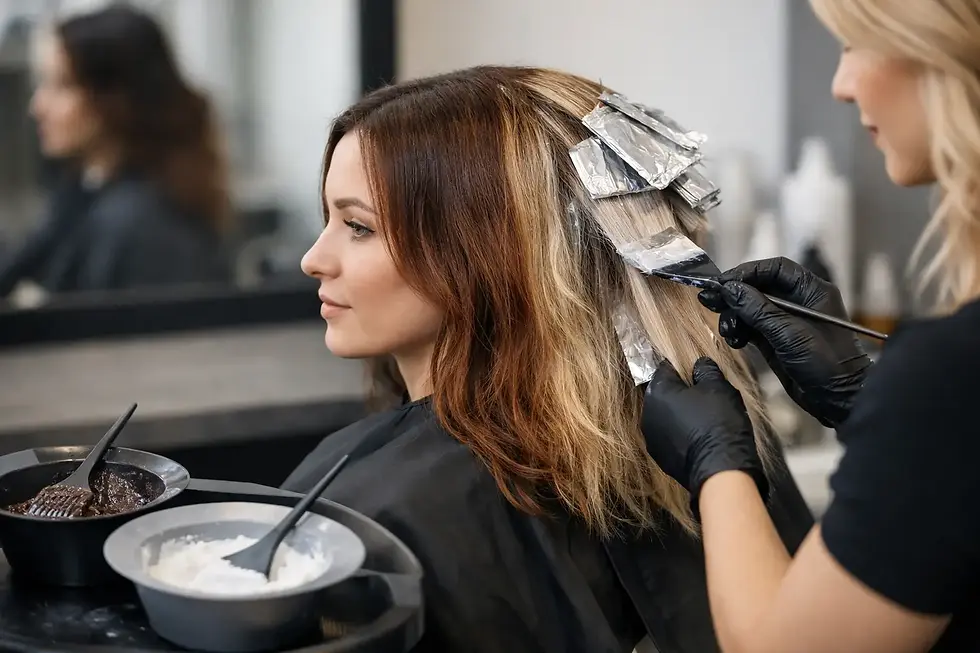
A professional colour correction appointment usually starts with an assessment rather than an instant formula. The hair needs to be examined in natural light, section by section, because one head of hair can easily have three or four different colour problems happening at once.
In some cases, the fix is to soften harsh warmth, rebalance the root area and add gloss for shine. In others, old artificial pigment needs to be lifted out carefully before the target shade is even possible. If the hair feels stretched, dry or weakened, preserving condition has to come first.
That is often the part clients find most reassuring. A specialist is not trying to force the hair into an unrealistic result on the day. The aim is beautiful, wearable colour that still leaves the hair feeling healthy enough to style and maintain.
The biggest mistake to avoid before your appointment
The most common mistake is trying to correct the correction. If the first box dye came out too warm, too dark or patchy, adding another one usually creates more layers of artificial pigment and makes salon correction more complex.
Purple shampoo, toner masks and home glosses can also muddy the result if they are used heavily on already uneven hair. They may disguise the problem for a wash or two, but they do not create an even base.
If you know you want professional help, it is usually best to stop colouring and book an assessment. Keep the routine gentle, avoid excessive heat, and focus on keeping the hair in the best possible condition.
Can every home colour disaster be fixed in one visit?
Sometimes yes, but not always. Honest colour work involves managing expectations well.
If the issue is mostly unwanted warmth, uneven brassiness or over-dark gloss, a single appointment may be enough to make a significant change. If the hair has repeated black box dye, heavy banding, bleach damage or multiple colour layers, a safer correction may need more than one session.
That is not a drawback. It is often the reason the final result looks polished rather than rushed. Lifting colour too aggressively can leave the hair rough, fragile and difficult to tone evenly. Slower correction often means a softer, more expensive-looking finish.
When a specialist approach matters most
There is a big difference between standard colour and corrective work. Corrective colour needs judgement, not just a formula.
A specialist will usually look at your natural base, previous salon history, home colour history, porosity, elasticity and the realistic end goal. They are also thinking about what you can maintain. A client who wants low-maintenance beige blonde needs a different plan from someone happy to come in regularly for glosses and toners.
In a one-to-one setting, that conversation is far more detailed. It allows the appointment to be tailored around both the hair and the lifestyle. For clients in Bethnal Green, Hackney and nearby parts of London, this matters because corrective colour is rarely a one-size-fits-all service.
How condition affects the result
Healthy-looking colour does not come from tone alone. It comes from the surface of the hair reflecting light properly.
When hair has been over-processed at home, even the right shade can still look flat if the cuticle is rough. That is why bond-building treatments and condition-focused services are often part of a proper correction plan. If the hair feels stronger, smoother and less porous, colour sits better and fades more evenly.
This is especially important if the long-term goal is balayage, grey blending, lighter brunette shades or a softer blonde. Pushing damaged hair too far usually creates a cycle of breakage, dullness and constant toning. Restoring quality first often gives a better visual result.
What to expect at a consultation
A good consultation should feel clear, not confusing. You should come away understanding what the problem is, what can be achieved, what needs to wait, and how the health of the hair will be protected.
Photos can help, but they are only part of the picture. Inspiration images often show hair with a different natural base, different density and different colour history. What matters more is finding the version of that look that works for your own hair.
You may also be advised on timing and aftercare. If your hair has recently been coloured at home, there are cases where waiting a short period before major correction makes sense. In other cases, immediate intervention is better, especially if the colour is heavily uneven.
How to prepare for colour correction after home hair dye
Come with honest hair history, even if it feels messy. Mention every box dye, toner, bleach, colour remover, henna-based product or tinted mask you have used. Leaving details out does not protect you from a difficult appointment - it just makes the formula less accurate.
It also helps to arrive with hair that has not been freshly curled or heavily coated in styling product. The clearer the starting point, the easier it is to assess tone and condition properly.
If the appointment is likely to be a longer one, think of it as an investment in getting back to a result you can trust. Corrective work takes time because precision matters.
What the end result should really look like
The best correction does not necessarily look dramatic. It looks balanced.
That might mean a brunette that feels rich and even again, a blonde that is softer and cleaner, or a blended result that removes obvious stripes and patches. Very often, the most successful outcome is hair that no longer looks corrected at all. It simply looks expensive, polished and believable.
For women looking for specialist colour in East London, that is usually the real priority - a result that works in daylight, at work, and weeks later, not just when it is first blow-dried.
If your home colour has gone wrong, the most useful next step is not another box. It is an expert eye, a realistic plan, and a correction process that respects both the colour and the condition of your hair.
See Real Results
Explore real client results from Sara Styles Hair in East London: View on Instagram
Book Your Appointment
Book your appointment at Sara Styles Hair in Bethnal Green, East London: Book Now

Comments