

Colour Correction for Box Dye Hair Explained

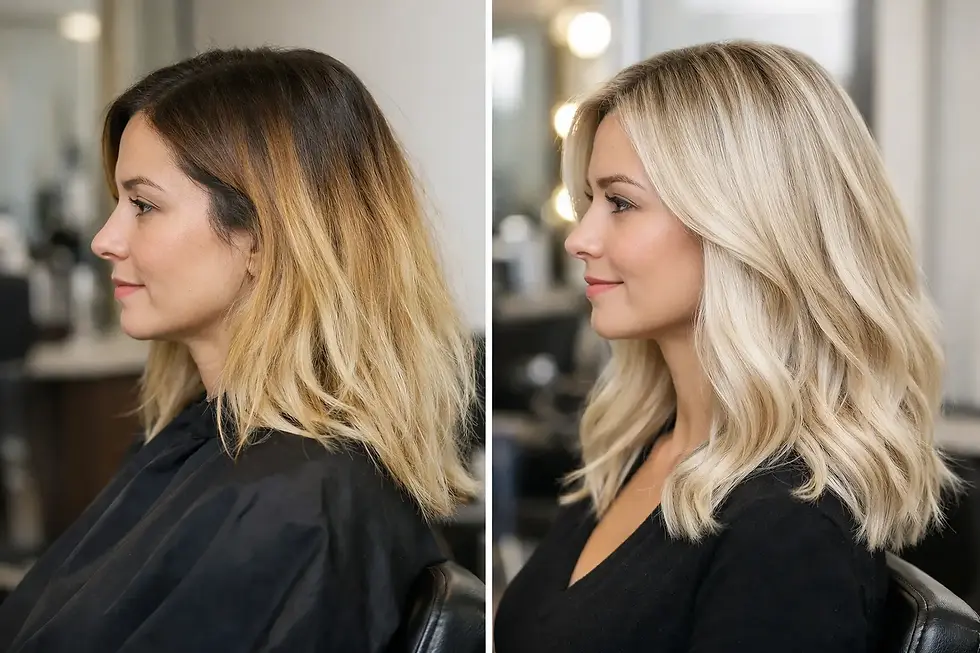
A box dye that looked promising on the packet can leave you with dark bands, warmth that will not shift, uneven ends or hair that suddenly feels less like itself. Colour correction for box dye hair is not about covering the problem with another quick colour. It is a considered salon process that looks at what is already in your hair, protects its condition and creates a result you can comfortably wear.
For clients in Bethnal Green, Shoreditch, Hackney and across East London, the aim is usually not an overnight, high-maintenance transformation. It is a softer, more even colour that suits your skin tone, grows out well and gives your hair the best chance of staying healthy.
Why box dye can be difficult to correct
Permanent box dye is designed to give a strong, reliable result at home. To achieve that, it often contains a high level of pigment, particularly in darker shades. Each repeat application can layer colour through the mid-lengths and ends, even when you only intended to cover regrowth.
This is why hair can appear almost black in some areas, then warmer or lighter in others. Previous colour, old highlights, naturally lighter ends, heat styling and porosity all affect how the dye has developed. Two people can use the same box and have completely different results.
Lightening over box colour is where patience matters most. Artificial dark pigment does not simply lift to blonde. It commonly reveals red, copper or orange tones first, and pushing past those stages too quickly can compromise the hair. A professional correction works with that reality rather than promising an unrealistic result in one sitting.
Colour correction for box dye hair begins with an assessment
Before selecting a colour or lightener, I need to understand your hair history. That includes the shades you have used, how often you have applied them, whether there is henna or metallic salt colour involved, and any previous bleaching, smoothing or keratin treatment.
An honest colour history is genuinely useful, not something to feel embarrassed about. Bring photos of the boxes where possible, and explain if the colour has been applied all over or just at the roots. A strand test may be needed, especially if your hair has been repeatedly coloured or feels dry and fragile. It shows how the hair responds before we commit to a larger service.
The consultation also sets a realistic destination. If your hair is very dark from repeated box dye but you want a bright, cool balayage, that may be a journey over several appointments. If you would be happy with a rich brunette, a warmer dimensional result or gentle face-framing brightness, we may be able to create a beautiful improvement sooner and with less stress on the hair.
The right correction depends on the result you want
There is no single formula for correcting home colour. The right approach depends on the pigment in the hair, its strength and your end goal.
When the hair is too dark
If your colour has built up darker than intended, a colour remover may help reduce artificial pigment before any lightening begins. This is different from bleach and can be a useful first step, but it does not guarantee a return to your natural shade. It may expose warmth underneath, which then needs thoughtful toning or further work.
For very dark bands or black box dye, controlled lightening can be needed. This is applied selectively rather than painted everywhere without a plan. Protecting the strongest areas while addressing the darkest ones helps avoid creating another uneven result.
When the hair has gone orange or brassy
Orange hair is often the visible stage beneath dark permanent colour. Toner can refine unwanted warmth, but only if the hair has lifted light enough for the chosen tone. Applying an ash shade over deep orange hair can create a muddy finish, or fade straight back to warmth.
Sometimes a warm brunette or soft copper is the most flattering and condition-conscious option while the hair recovers. Warmth is not a failure of colour correction. When it is placed deliberately and balanced properly, it can look glossy, expensive and natural.
When the colour is patchy
Patchiness often happens because porous ends absorb more colour while resistant roots process differently. The correction may involve gentle cleansing of overly dark areas, lowlights to reconnect uneven light pieces, or carefully placed balayage to break up block colour.
This is where placement makes a significant difference. A few well-positioned lighter pieces around the face and through the lengths can make hair look softer and more dimensional without asking every strand to go through heavy lightening.
Protecting hair condition is part of the service
The fastest route is not always the best route. If hair is already dry, snapping or highly elastic when wet, additional bleaching may not be appropriate that day. It can be better to improve the tone, remove harsh contrast and focus on condition before working towards more brightness later.
Bond-building treatments such as Olaplex can support the hair during technical colour work, but they are not a licence to over-process it. They are part of a careful plan alongside suitable developer strength, accurate timing and a realistic amount of lift.
A healthy-looking finish also relies on what happens after the colour appointment. Regular trims, heat protection, a colour-safe shampoo and sensible use of masks all help. If you have very porous hair, your toner may fade faster at first. A gloss or toner refresh between larger appointments can keep the shade polished without repeatedly lightening the hair.
What to expect at your appointment
Colour correction appointments are often longer than a standard root colour because the work is more detailed. Your appointment may include a consultation, strand testing, colour removal or lightening, toning, treatment and a cut or finish. The exact timing depends on your starting point and what the hair safely allows.
It is helpful to arrive with clean, dry hair where possible, avoiding heavy oils, coloured dry shampoo or root cover-up sprays. These can make it harder to accurately assess the hair and may interfere with the colour process. Wear something comfortable, bring reference photos of colours you like, and be open to discussing what is achievable on the day.
At Sara Styles Hair, the focus is on a one-to-one plan rather than applying a standard correction formula. You should leave knowing what has been achieved, how to care for it and whether a follow-up appointment would help you reach your longer-term colour goal.
When to pause and speak to a specialist
If your hair feels gummy when wet, breaks easily, has been treated with henna, or you have had a reaction to hair colour before, do not attempt another home correction. A patch test and consultation are essential. Metallic salts and some henna-based products can react unpredictably with professional lighteners, so this information must be shared before any service begins.
It is also worth seeking advice if you are tempted to put another dark box dye over uneven colour. It may make the hair look temporarily more uniform, but it can add another layer of pigment and make a future lightening appointment more complex.
A well-planned correction does more than change the shade. It restores balance to the hair, softens the grow-out and gives you a colour that feels like you again, without taking unnecessary risks with condition.
See Real Results
Explore real client results from Sara Styles Hair in East London on Instagram: @sarastyleshair_
Book Your Appointment
Book your appointment at Sara Styles Hair in Bethnal Green, East London.
Explore real client results from Sara Styles Hair in East London: View on Instagram
Book your appointment at Sara Styles Hair in Bethnal Green, East London: Book Now


Comments