

Hair Extensions for Volume That Look Natural

Fine hair can look beautifully healthy and still feel flat through the lengths. If your ponytail feels smaller than you would like, your styling drops quickly, or you find yourself relying on backcombing to create shape, hair extensions for volume can offer a refined, natural-looking solution without changing your overall style.
The aim is not necessarily dramatic length. For many clients, the most effective result comes from carefully placed tape extensions that fill out the areas where hair is naturally finer, creating a fuller silhouette, more polished movement and a finish that holds its shape.
What volume extensions can change
Volume is often about proportion rather than length. Hair can be thick enough around the crown but appear sparse through the ends, around the sides or when it is worn up. A small number of well-matched extension tapes can add density exactly where it is missing, so the haircut looks more balanced from every angle.
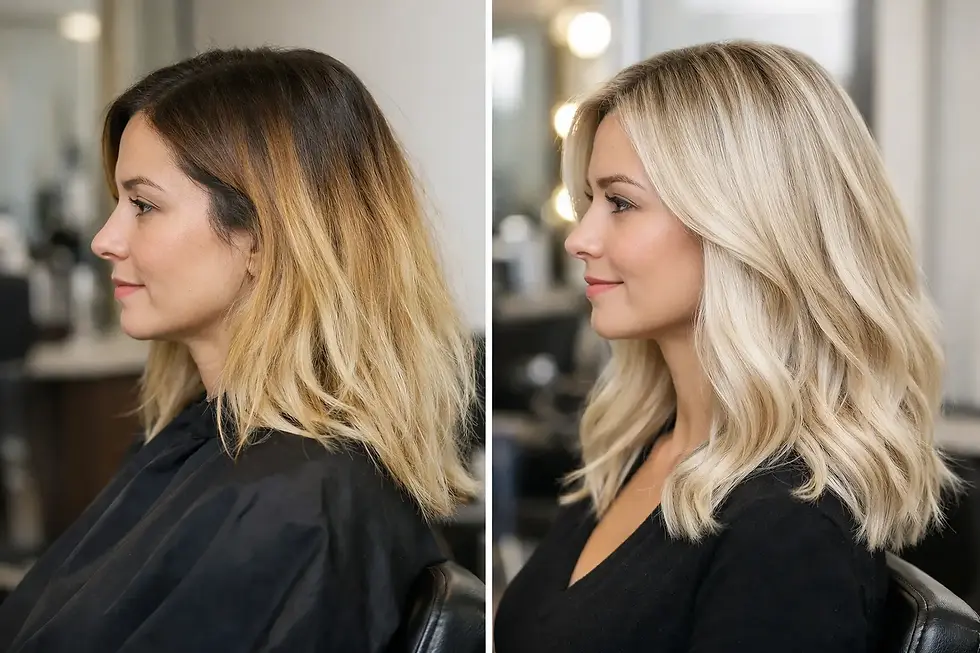
This can make a real difference to everyday styling. Blow-dries look fuller through the ends, waves appear softer and more substantial, and a simple ponytail or half-up style feels more finished. The result should still look like your hair, just with the fullness you may have lost over time or never naturally had.
At Sara Styles Hair, the approach is always tailored to the client’s own density, haircut, colour and lifestyle. Extensions should support your natural hair rather than overpower it. That is especially important for fine hair, where bulky application or too much added weight can be visible and uncomfortable.
Why tape hair extensions work well for volume
Tape extensions are a strong choice for clients who want discreet fullness. Each section is slim and lies flat against the head, which means the application can be placed strategically without creating obvious bulk at the roots. When the colour is blended correctly and the placement is considered, the tapes remain difficult to detect in loose hair.
They are also versatile. Some clients need fullness through the lower lengths only, while others benefit from a little extra density around the sides to make a bob, lob or long layered cut look more substantial. The amount of hair used should reflect the result you want, not a fixed package or a one-size-fits-all method.
The trade-off is that tape extensions require consistent maintenance. They need to be moved up as your natural hair grows, and they should be applied to healthy sections with enough natural hair to support them. They are not a shortcut for hair that is currently very fragile, severely broken or shedding more than usual. In those cases, it is better to assess condition first and build a plan around hair health.
Volume, length or both?
It is easy to assume extensions are only for long, dramatic hair. In reality, adding volume can be the more subtle and valuable choice. A client with shoulder-length hair may only need a small amount of added hair to make the ends look denser, especially after a colour change or a period of breakage.
If you would like both length and volume, the extension hair needs to be blended into the shape of your cut. A blunt cut can look heavier and more fashion-led, while gentle layers help create softer movement. Neither is automatically better. The right choice depends on how you wear your hair day to day and how much styling you are happy to do.
Colour matching makes the result believable
A natural extension result depends as much on colour work as it does on application. Hair is rarely one flat shade, particularly if you have balayage, lived-in highlights, grey blending or warmer pieces around the face. Using one block colour can make extensions look separate from your own hair, even when the length and volume are right.
A specialist colour match takes account of the root, mid-lengths and ends, as well as the tones that show when your hair moves. In some cases, combining two shades creates a more convincing blend than choosing a single colour. This is where a consultation matters: the goal is to make the added hair disappear into your existing colour, not sit on top of it.
For clients in Bethnal Green and across East London who colour their hair regularly, it is also worth planning extensions alongside your colour appointments. Refreshing balayage, adding lowlights or adjusting tone before fitting can create a cleaner, more seamless finish. Colour and extensions should be treated as one overall look.
How much hair do you actually need?
More hair does not always create a better result. For fine hair, too many tapes can feel heavy, become harder to blend and place unnecessary tension on the natural hair. The most flattering application is often a lighter, precise one that adds density where it is genuinely needed.
During a consultation, I would look at your natural density, the condition of your ends, where your hair feels thinnest and how you usually part and style it. Your desired result matters too. Someone who wears their hair in loose waves may want a different level of fullness from someone who wears a sleek, straight finish every day.
Your natural hair should also be long enough to cover the attachment points comfortably. If the hair is very short, very fine around the hairline or heavily layered, a different placement plan may be needed. Honest advice at this stage prevents an application that looks good only in the salon chair.
Looking after tape extensions at home
Good aftercare protects both the extension hair and your natural hair. Brush gently from the ends upwards, supporting the hair near the roots as you work. A loop brush or extension-friendly brush helps you detangle without catching on the tapes.
Wash with care and avoid applying conditioner, masks or oils directly over the adhesive area. Keep richer products through the mid-lengths and ends instead. You can still enjoy a polished blow-dry or waves, but use heat protection and avoid excessive heat at the tape tabs.
Sleeping with dry, loosely tied hair can reduce tangling. If you exercise often, swim regularly or wear your hair up most days, mention this in your consultation. These habits do not rule extensions out, but they can influence placement, product recommendations and the maintenance routine that will work best for you.
Maintenance is part of the service
Tape extensions need regular move-up appointments, commonly around every six to eight weeks, although timing depends on your natural growth and the way the tapes are sitting. Leaving them in too long can make them harder to remove and may place uneven tension on the natural hair.
A professional maintenance appointment includes safe removal, checking your hair and scalp, replacing tapes where appropriate and refitting the hair in a refreshed placement. This is also a useful moment to assess whether your current amount of volume still suits your cut, colour and hair condition.
When extensions are not the first answer
If your hair has become noticeably thinner quite suddenly, is breaking heavily after bleaching, or you have scalp discomfort, extensions may not be the right first step. It is worth identifying what has changed and focusing on gentle colour choices, regular trims, conditioning support and treatments that improve manageability before adding extra hair.
For hair that feels dry but is structurally strong, a keratin treatment or a carefully planned conditioning routine may improve shine and smoothness. For hair affected by colour stress, a bond-building approach can help support the condition between appointments. Extensions work best when they are part of a thoughtful hair plan, not a way to hide an issue that needs attention.
A fuller look should still feel like you
The best hair extensions for volume are not the ones people notice. They are the ones that make you feel more confident wearing your hair down, styling it less aggressively and seeing a fuller, healthier-looking shape in the mirror.
A personal consultation gives you space to discuss what is realistic for your hair, how much maintenance suits your routine and whether tape extensions are the right fit. With the right placement, colour blend and aftercare, added volume can be understated, wearable and entirely your own.


Comments