

What Is Colour Correction Hair? A Stylist Explains

A colour appointment can feel very different when you are trying to fix a result rather than simply refresh it. If you are asking, what is colour correction hair, it means a tailored salon process used to improve unwanted, uneven or over-processed colour while keeping the hair’s condition at the centre of every decision.
It might involve softening dark box dye, removing bands left by previous lightening, balancing brassy highlights, blending a harsh regrowth line, or correcting a colour that has gone too warm, too cool or too flat. Colour correction is not one service with one formula. It is specialist work that begins with understanding what is already on your hair and what it can safely achieve.
What is colour correction hair, exactly?
Colour correction is the process of taking hair from a result that feels wrong, uneven or difficult to maintain towards a more balanced, wearable colour. The aim is not always to create a dramatic transformation in a single appointment. Often, the best result is a thoughtful route back to healthy-looking hair and a colour that grows out more softly.
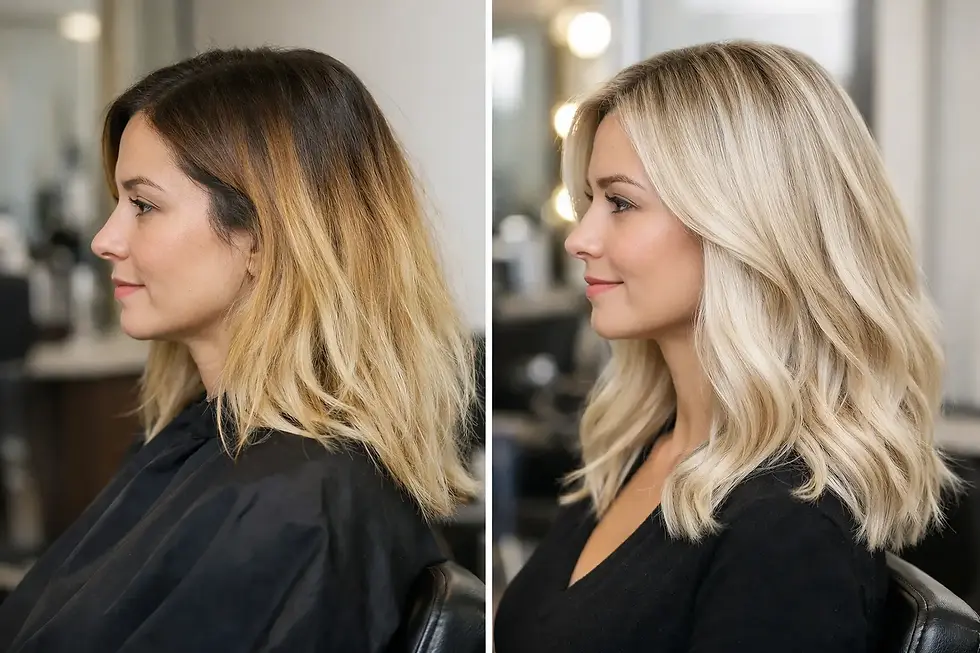
A correction may be needed after at-home colouring, a previous salon service that did not go to plan, a build-up of old tones, or a major change of direction. For example, someone who has repeatedly coloured their hair dark may want to return to a lighter brunette or soft balayage. Someone else may have very pale hair with patchy areas, yellow tones or breakage after too much bleaching.
The right approach depends on the hair’s history, porosity, strength and the desired finish. Two clients can show the same reference photo but need completely different plans to reach it.
Why hair colour can go wrong
Hair colour is chemistry, but it is also history. Every permanent tint, toner, bleach application, gloss, heat styling routine and chemical treatment can affect how the hair responds next time.
Dark artificial colour is particularly difficult to lift predictably because it can leave warm red, copper or orange undertones behind. Lightened hair can have the opposite issue: it may become porous and grab toner unevenly, leaving areas that look grey, violet, khaki or dull. Even a colour that looked beautiful on the day can fade unevenly if the hair is very dry or if the formula was not suited to the base.
Banding is another common concern. This is where visible horizontal lines appear through the lengths because different sections have been coloured, lightened or grown out at different times. It can be corrected, but blending these areas takes precision and often more than one session.
The consultation matters as much as the colour
A proper correction starts before any colour is mixed. Your stylist needs an honest picture of your hair history, including home colour, henna, previous highlights, smoothing treatments and extensions. It is always better to mention everything, even if it was years ago. Old colour can still influence the result.
At a colour correction consultation, the hair should be assessed for elasticity, dryness, breakage and uneven porosity. A strand test may be needed, particularly when lifting dark colour or working on fragile blonde hair. This small test helps show how the hair is likely to react and whether the planned service is safe.
The conversation should also cover your real goal. Do you want to be lighter immediately, or would you rather have a soft, believable brunette that improves the hair’s appearance and condition? Are you happy to return for a second appointment? How much maintenance suits your routine? Clear answers allow your stylist to create a plan that works beyond the first reveal.
What happens during a colour correction appointment?
The techniques used depend entirely on the starting point. A correction may involve a colour remover, gentle lightening, lowlights, root melting, toning, glossing or strategically placed highlights. Sometimes the answer is to add depth before adding more lightness. This can make patchy blonde hair look fuller and more expensive while giving it time to recover.
For unwanted warmth, a stylist may lift the hair carefully first and then neutralise the exposed undertones with a toner. Simply applying ash colour over orange hair rarely produces a clean result, especially where the hair is uneven. The underlying warmth has to be understood and balanced properly.
If the aim is to move away from very dark colour, the process may be gradual. Removing artificial pigment can reveal warm stages before the hair reaches a lighter brown or blonde. In this situation, a lived-in balayage or dimensional brunette can be a sensible first step. It creates movement without asking compromised hair to withstand more than it can handle.
A professional correction should include protection and conditioning where appropriate. Bond-building treatments such as Olaplex can support the hair during lightening services, but they do not make severely damaged hair indestructible. The safest route may still be slower, with time between appointments for care and recovery.
Can colour correction be done in one appointment?
Sometimes, yes. A straightforward toner adjustment, a brassy blonde refresh or blending a small root band may be completed in one visit. More complex corrections, especially those involving dark box dye, uneven bleach or fragile lengths, may need a staged plan.
That is not a compromise in skill. It is a sign that the stylist is protecting the hair rather than chasing an unrealistic result. Trying to go from black dyed hair to bright blonde in one long appointment can lead to excessive warmth, breakage or both. A beautiful result should still look and feel good once you leave the chair.
For clients who want an immediate improvement, the first appointment can often create a significant change: less brassiness, softer contrast, more even tones and a shape that looks intentional. Further sessions can build on that foundation safely.
How long does colour correction take?
Colour correction appointments are usually longer than a standard colour service because the hair requires careful sectioning, monitoring and multiple stages. Allowing enough time matters. Rushing colour correction is how uneven lifting and unnecessary stress on the hair can happen.
The exact timing depends on your starting colour, hair density, length and the service plan. A consultation is the best place to discuss what is realistic for your appointment and whether you should expect one session or a series.
At Sara Styles Hair, colour correction is approached as individual specialist work, not a quick fix. For clients in Bethnal Green, Shoreditch, Hackney and the wider East London area, that means a clear conversation about the route to a result that is polished, natural-looking and manageable at home.
Looking after corrected hair at home
Your aftercare helps preserve the work done in the salon. Corrected hair can be more porous than untreated hair, so it may fade faster or feel dry if it is not cared for properly. Use professional colour-safe shampoo and conditioner, reduce heat where possible and always apply heat protection before blow-drying or styling.
If your stylist recommends a toning shampoo, use it as directed rather than at every wash. Purple or blue products can be useful for controlling unwanted warmth, but overuse can leave very light or porous hair looking dull or slightly violet.
Regular trims, conditioning treatments and sensible spacing between colour appointments make a genuine difference. If your hair is recovering from breakage, your next appointment may focus on gloss, root blending or a healthy haircut rather than more lightening. That decision protects the long-term result.
When to book a colour correction consultation
Book a consultation if your hair has multiple tones, visible bands, strong brassiness, unexpected dark patches, uneven bleach or a colour you no longer recognise in the mirror. It is also worthwhile before attempting a big change after years of box dye or frequent salon colour.
Bring photos of your hair in natural light and a few realistic inspiration images. The most helpful reference is not always a celebrity blonde or a heavily filtered social post. Look for hair with a similar natural depth, density and texture to yours, then let the consultation shape the route there.
The best colour correction does not just cover up a problem for a few weeks. It gives you a colour that feels more like you, works with your lifestyle and leaves your hair in a better place for the appointments to come.
See Real Results
Explore real client results from Sara Styles Hair in East London: View on Instagram
Book Your Appointment
Book your appointment at Sara Styles Hair in Bethnal Green, East London: Book Now


Comments